
Chapter 4: Using Coercion & Threats
Under the Power and Control Wheel, coercion and threats refer to behaviors used to instill fear, enforce compliance, or punish resistance. In my relationship with him, coercion appeared both overtly and subtly, escalating over time as he sought greater control over my behavior, speech, and body.
Threats of Retaliation
After other women posted publicly about him online, he began making indirect but concerning statements about what he would do if he discovered who had posted about him. These comments were framed as hypothetical, but the implication was clear: there would be consequences.
The conversation shown below took place in May 2025. At that point, I had not posted about him publicly. I would not do so until January 2026, after discovering that he had a child he had concealed from me for the entirety of our relationship.
These statements established a climate of fear and served as a warning against speaking openly about my experiences.
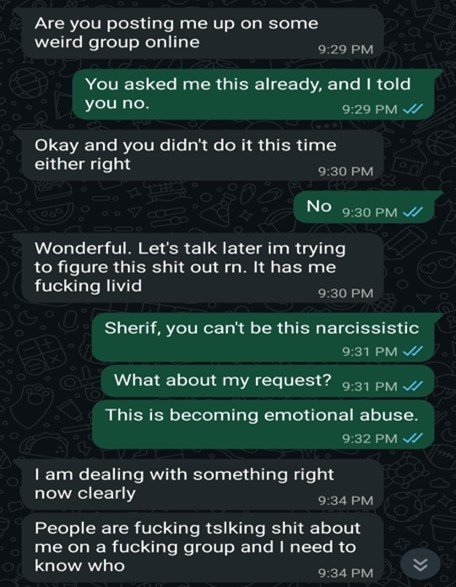
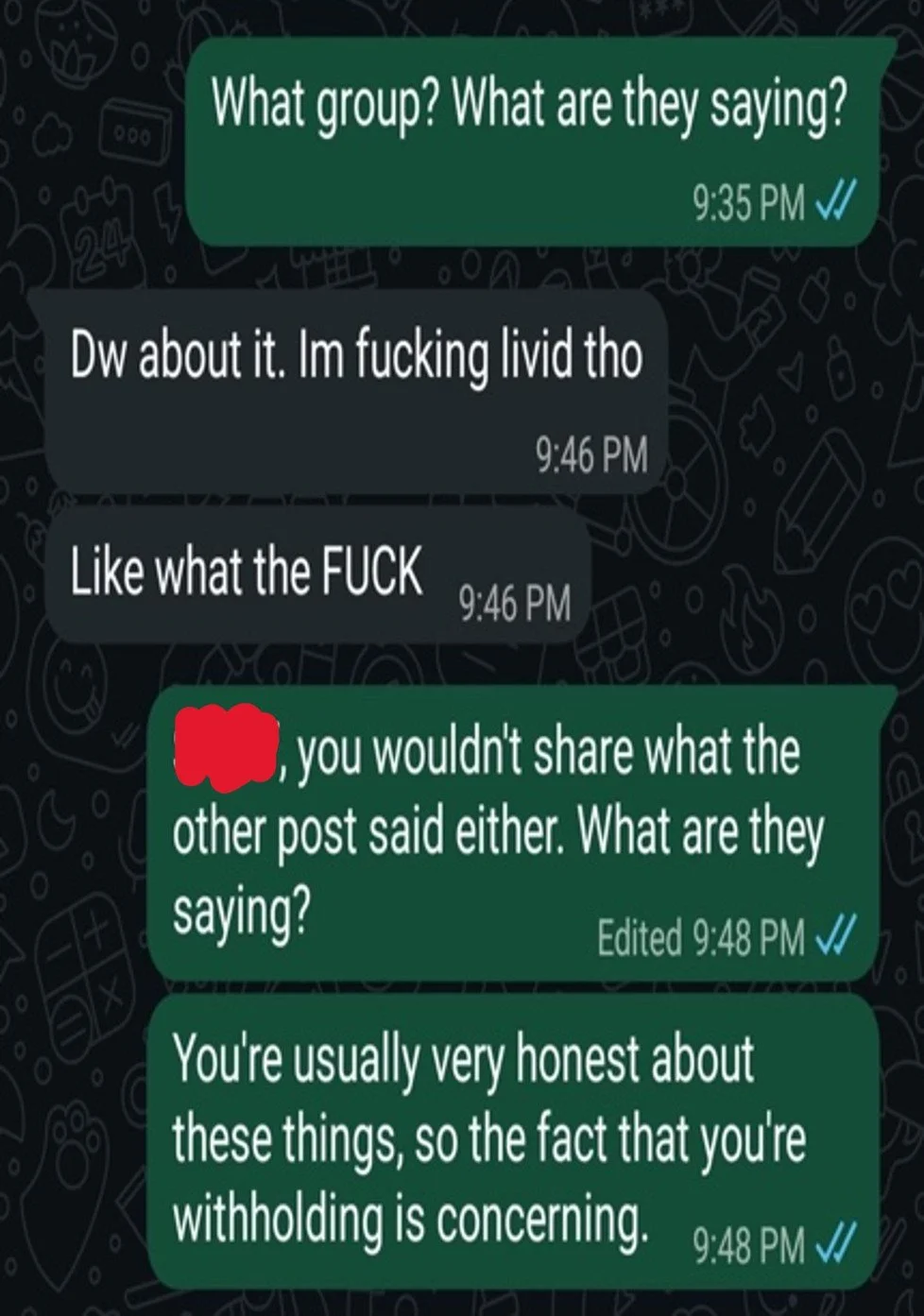
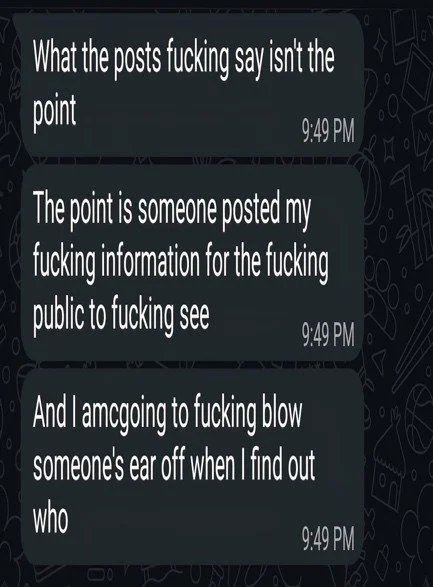
Figure 18 Indirect threats of retaliation following public allegations, framed as hypothetical but conveying implied consequences for disclosure.
False Accusations and Intimidation
He later accused me of “shadow following” his social media accounts and blocked me after I asked him to provide proof. At the time:
· I had already blocked him on Instagram.
· He blocked me on Facebook and locked his account.
I pointed out that it is not possible to be “shadow followed” if an account is locked and inaccessible. He never provided proof of this claim. The accusation functioned as intimidation and justification for cutting off communication, rather than as a legitimate concern.

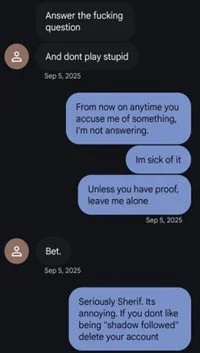
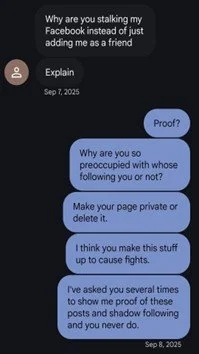
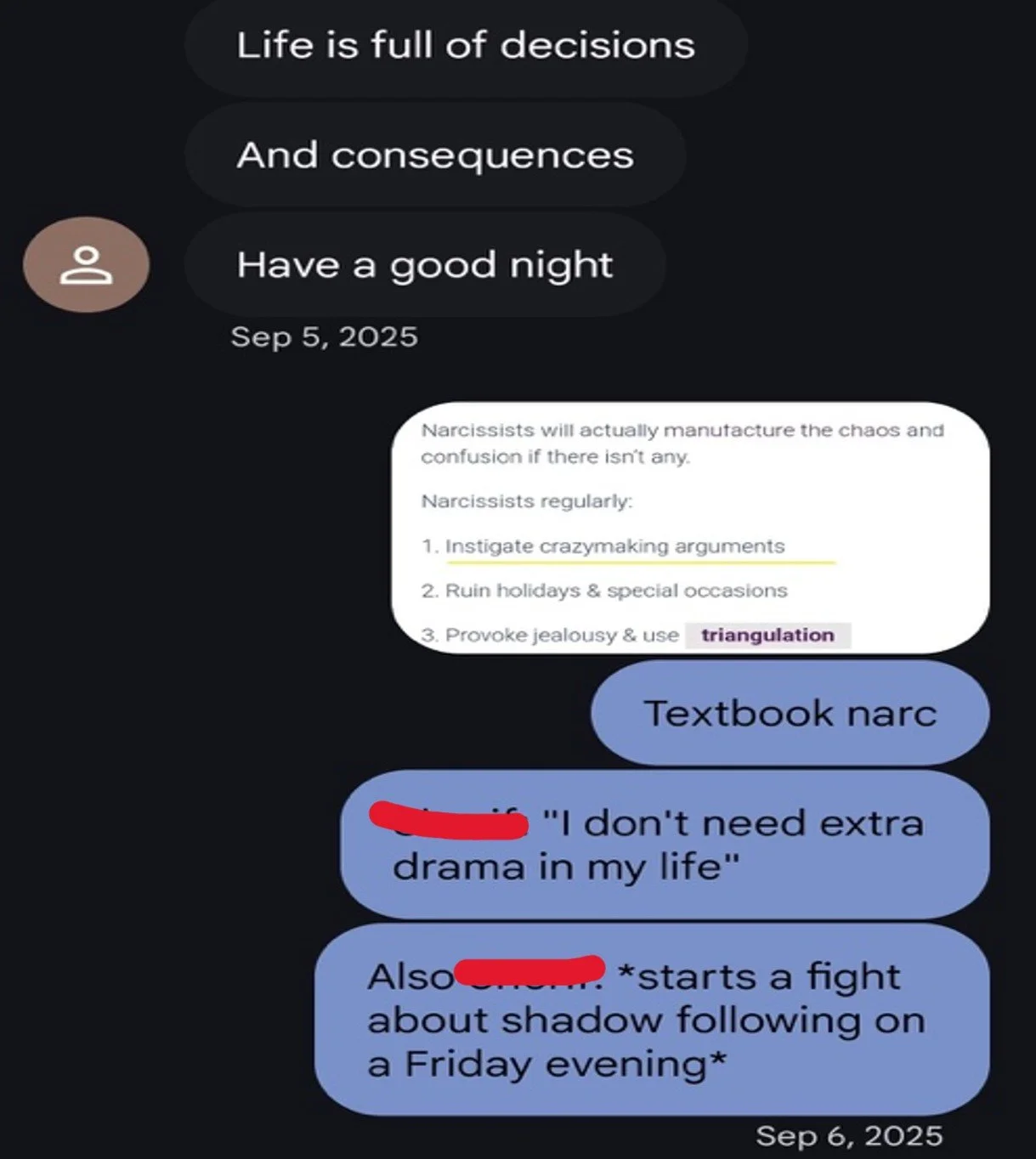
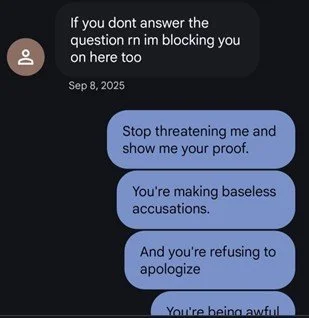
Figure 19 Text messages showing repeated accusations of “shadow following,” accompanied by threats to cut off communication, despite the absence of evidence and the account being inaccessible.
Threats of Abandonment
On multiple occasions he threatened to leave, or abruptly left, when I did not comply with his sexual expectations. These departures were often framed as reactions to my behavior, but they consistently occurred when I asserted boundaries.
On one occasion, he left my apartment while I was working, stating that I should have told him I was busy. This was used to place blame on me rather than acknowledge his decision to leave without discussion.
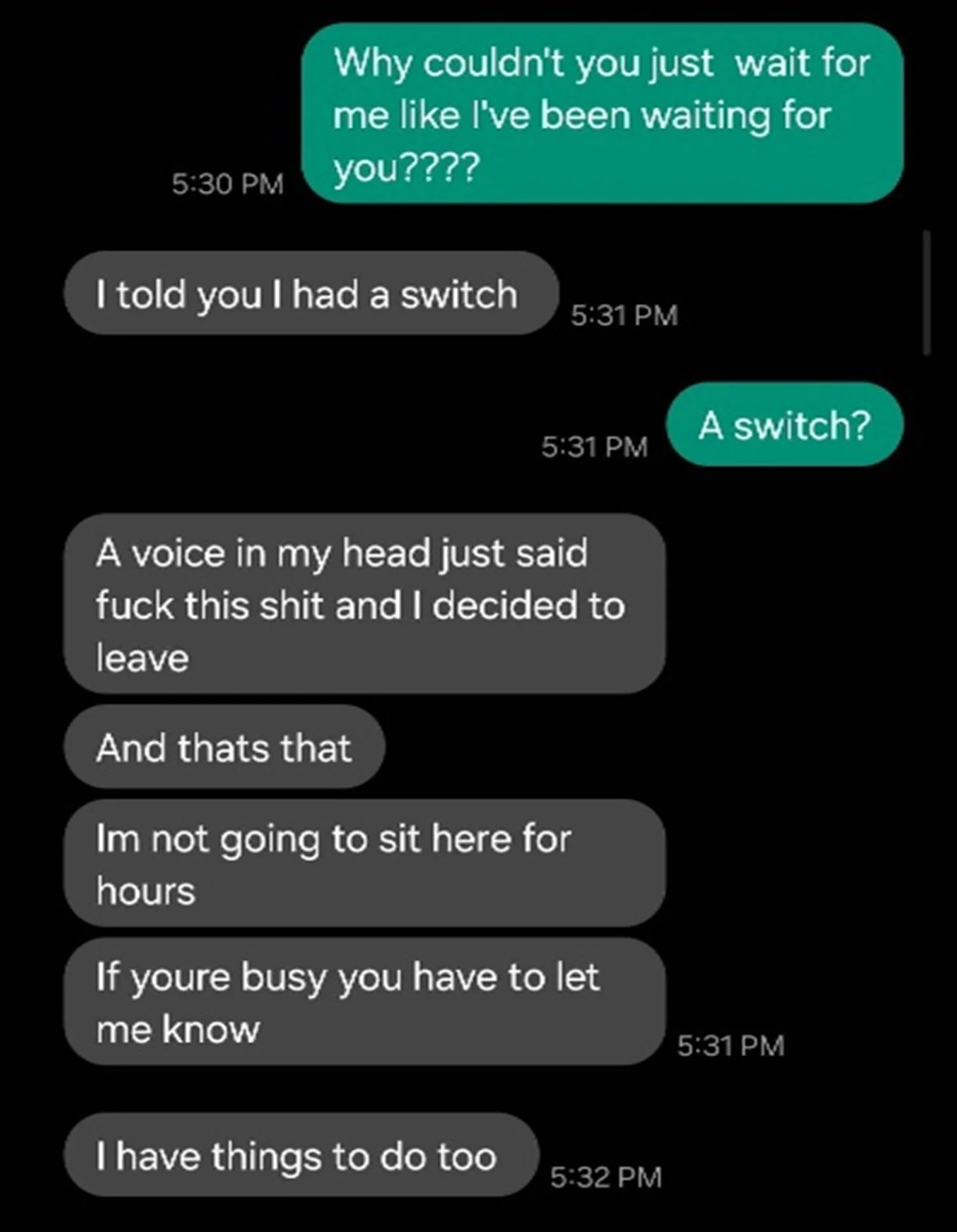
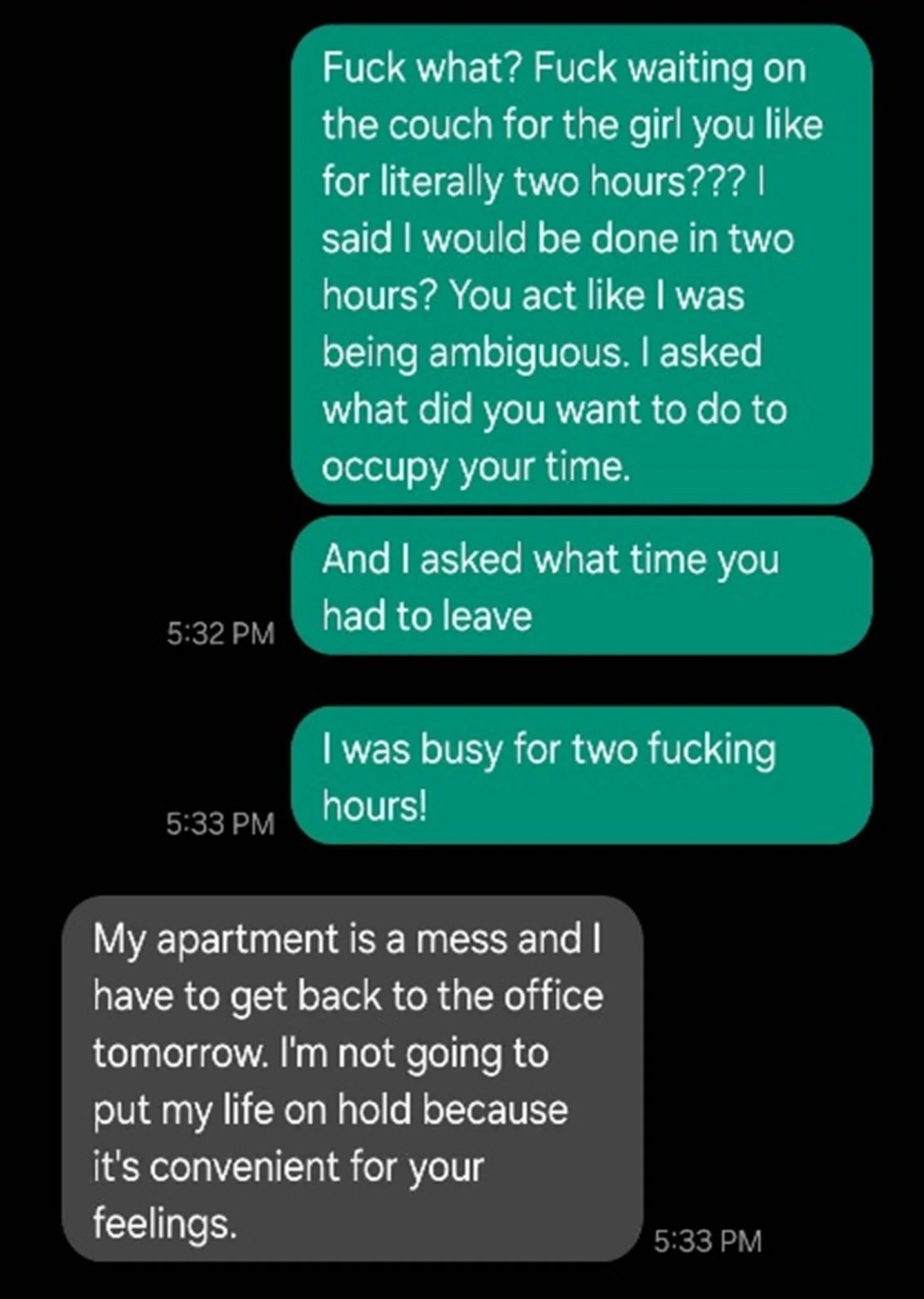
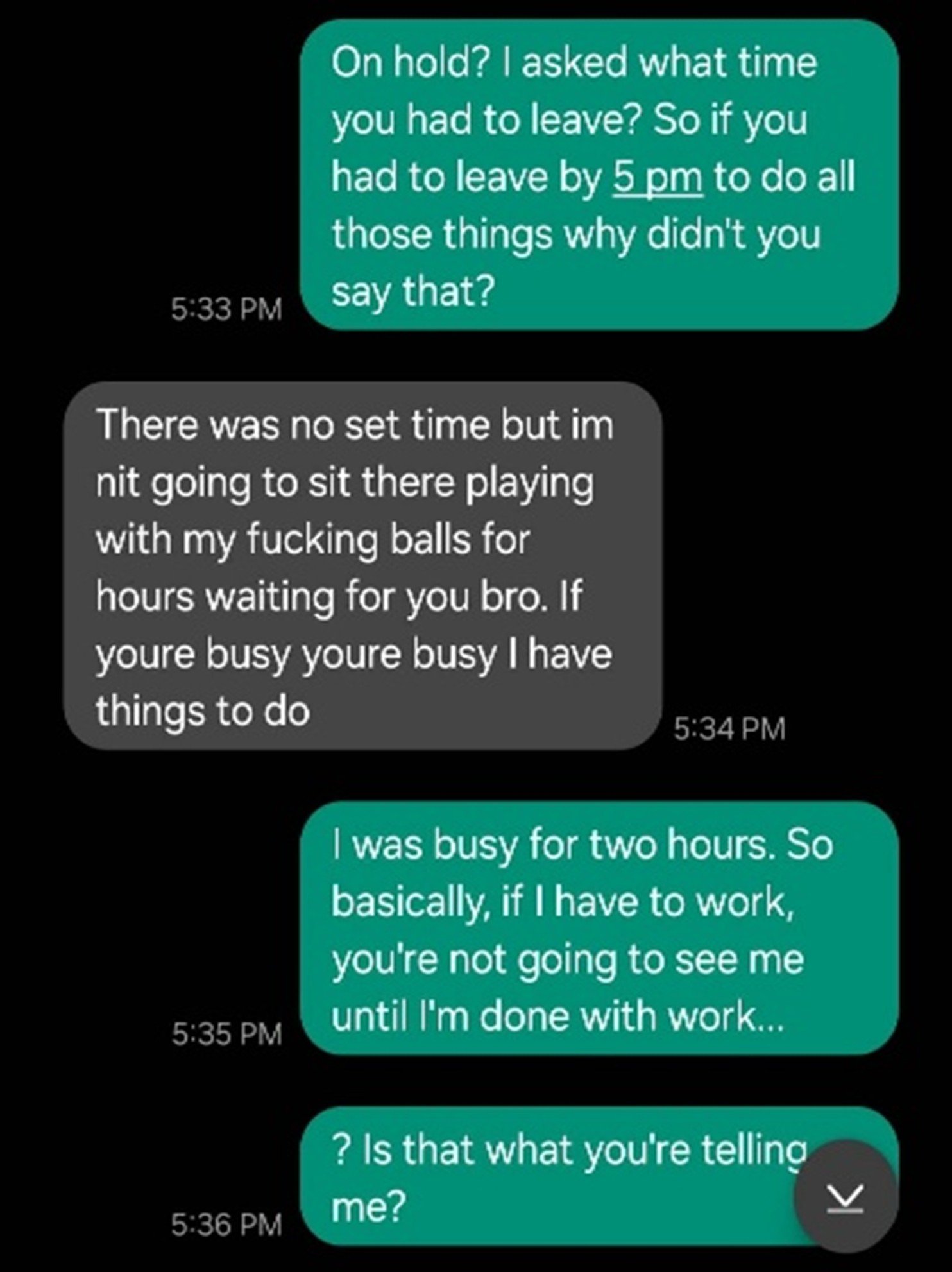
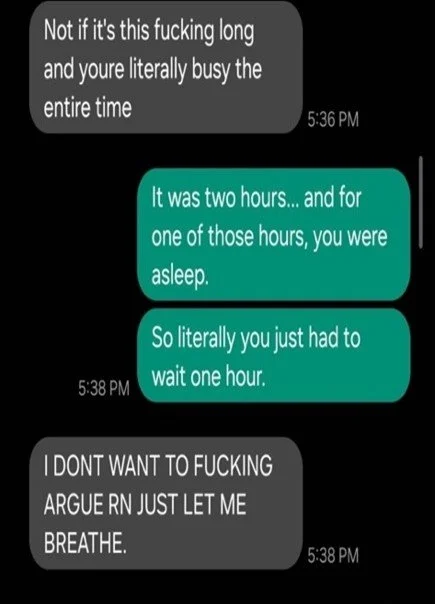
Figure 20 Text messages illustrating threats of abandonment and abrupt withdrawal in response to boundary-setting, framed as reactions to my behavior rather than his choice to leave.
Withholding Affection and Physical Presence as Punishment
He routinely withdrew sex, affection, or his physical presence as a form of punishment. These withdrawals were not communicated as needs or boundaries; they were used to condition compliance.
A particularly clear example occurred on June 14. He came over intending to have sex. I was on my period and offered to engage in other sexual acts. He demanded oral sex and stated that he would leave if I did not comply.
I offered alternatives. He refused them.
I did not want him to leave. I ultimately complied.
Later, he denied threatening to leave and reframed the incident as a mutual “negotiation” that lasted an hour. This reframing erased the coercive dynamic and shifted responsibility onto me, despite the fact that my consent was obtained under threat of abandonment.
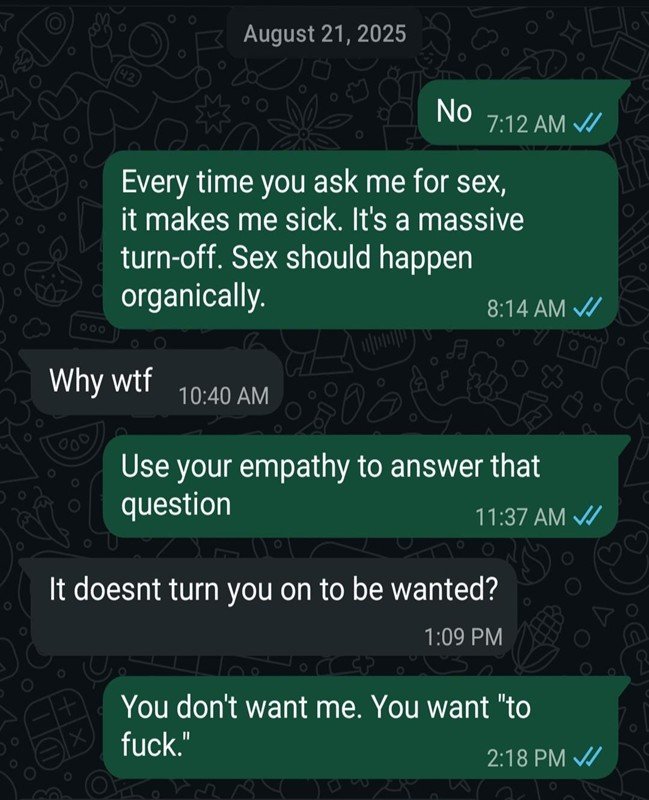
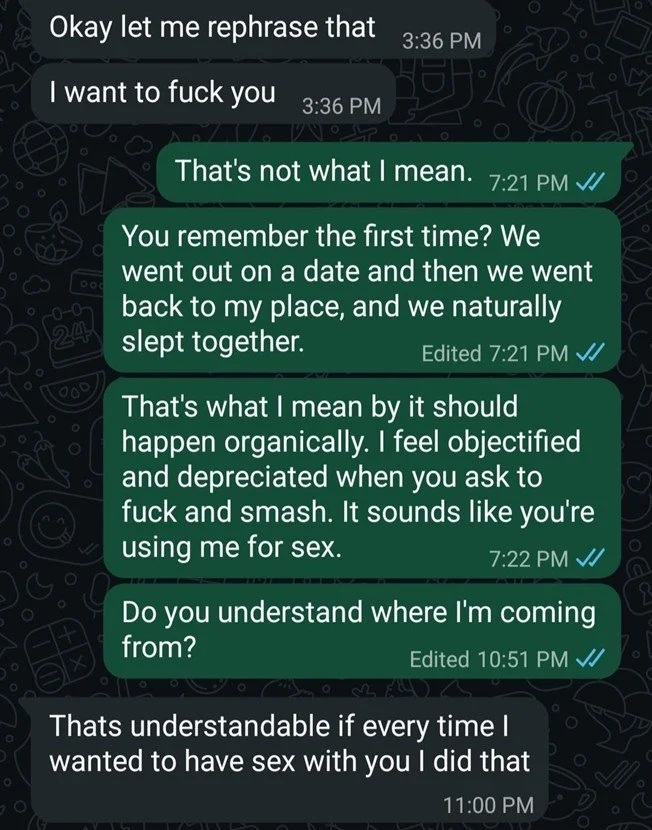
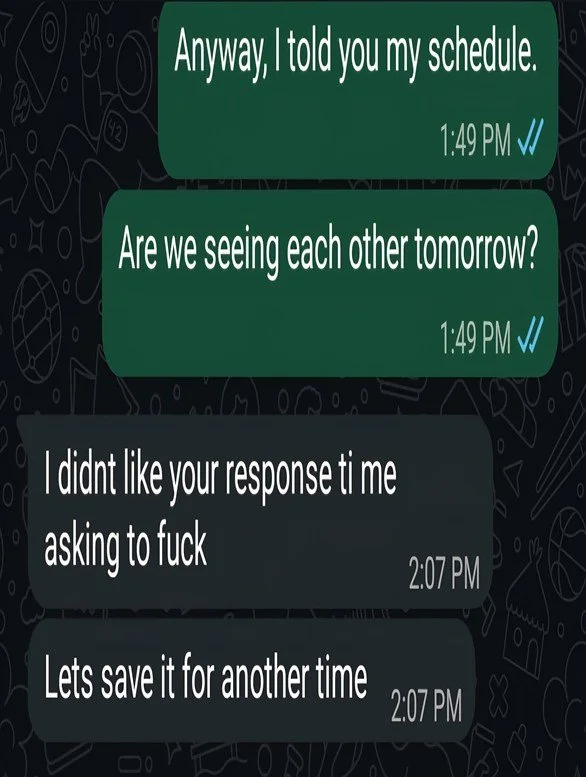
Figure 21 Messages showing threats of abandonment and sexual pressure later reframed as “negotiation,” illustrating how consent was obtained under threat and responsibility was shifted after the fact.
Why This Constitutes Coercion
Consent obtained under pressure, threat, or fear of loss is not freely given. The repeated use of abandonment, withdrawal, intimidation, and denial created an environment where compliance felt necessary to maintain the relationship.
These behaviors were not isolated incidents. They formed a consistent pattern of coercion that escalated over time.
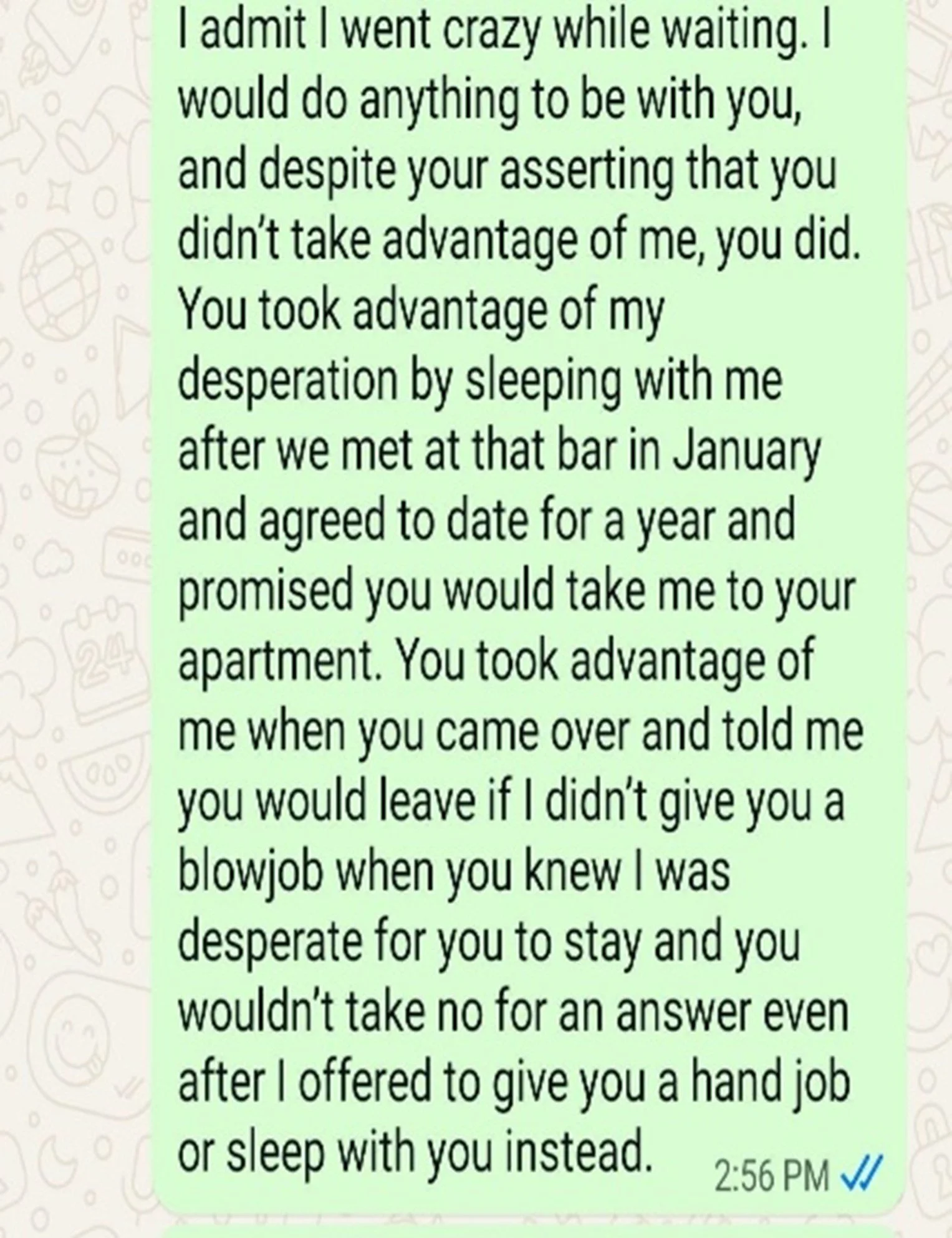
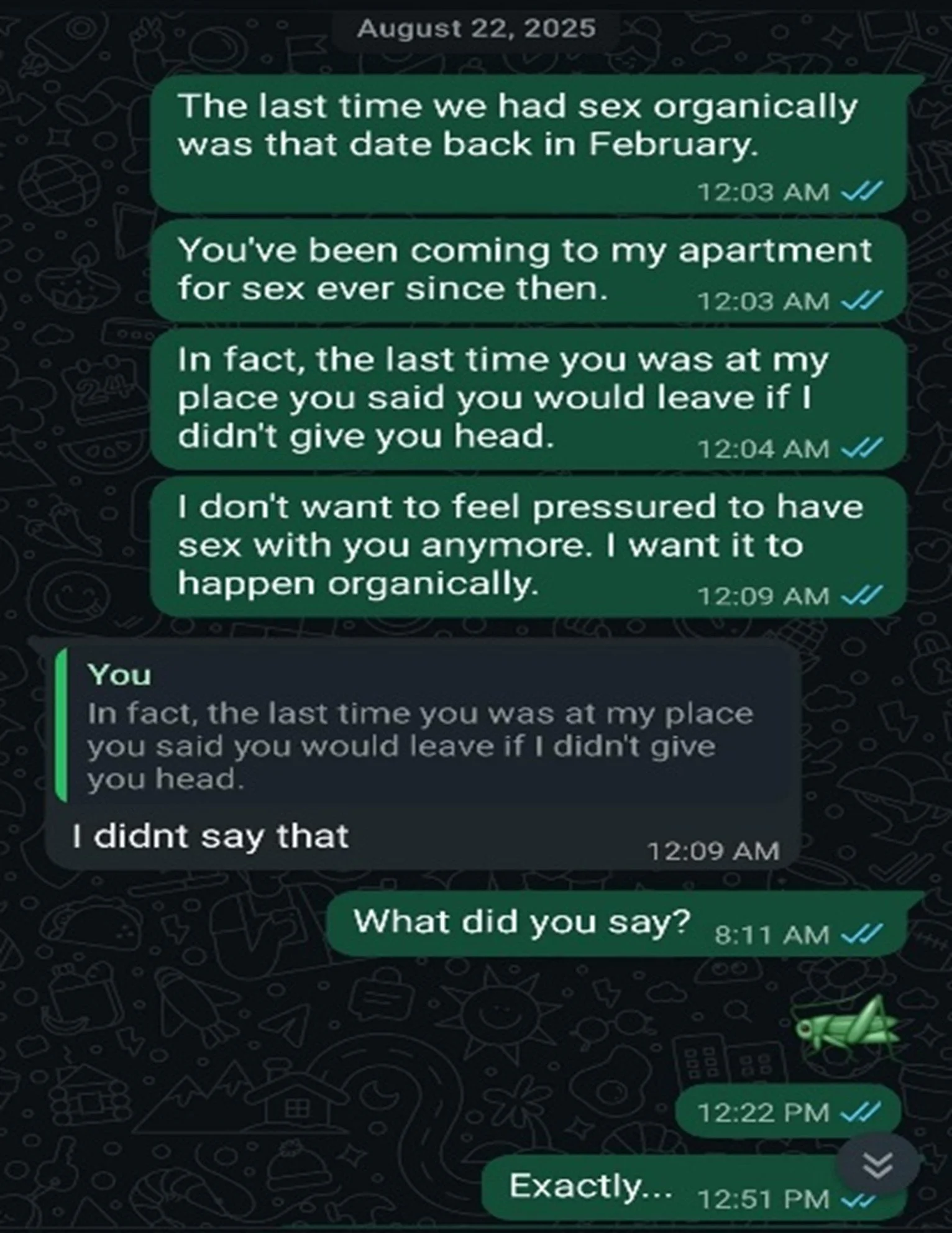
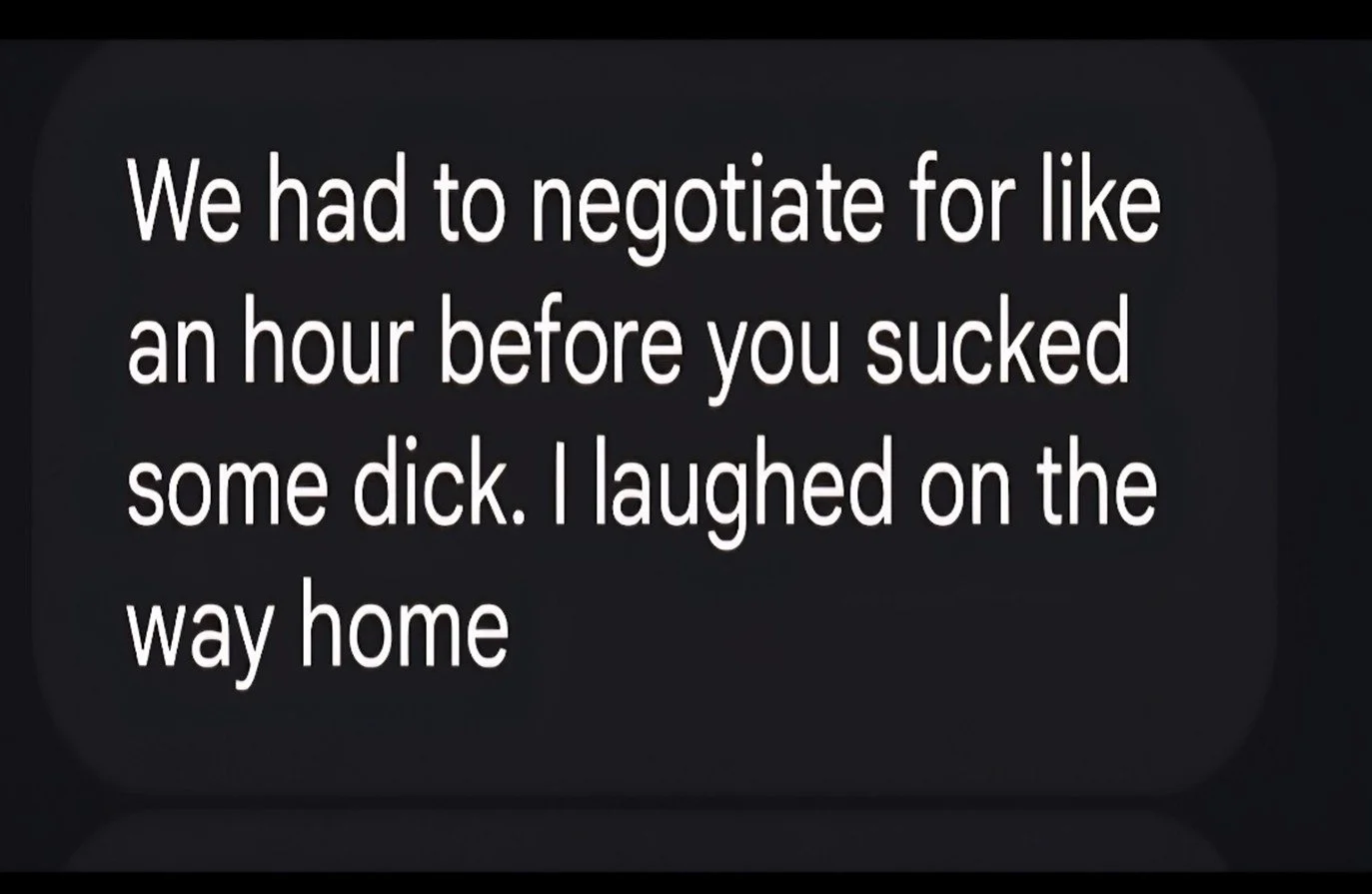
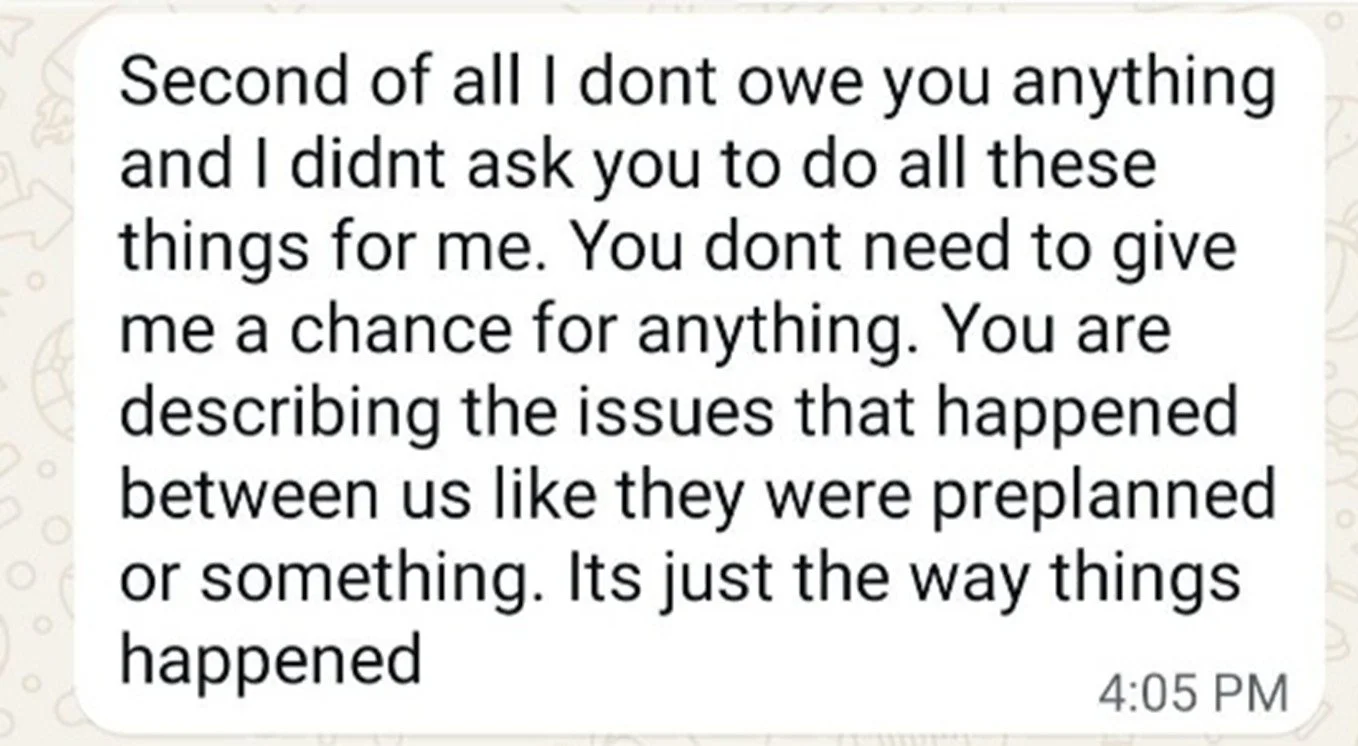
Figure 22 Messages illustrating sexual pressure, denial, and post-incident reframing that minimized coercion and dismissed the absence of freely given consent.