
Chapter 3: Lies & Excuses
Lying as a Form of Psychological Abuse
One of the most frequent complaints I hear from abused women is that their partners lie repeatedly. Chronic deception is a form of psychological abuse that, over time, erodes trust, destabilizes reality, and undermines a victim’s sense of safety and judgment.
As Lundy Bancroft explains, repeated lying is not incidental in abusive relationships; it is a core mechanism of control (Bancroft, p. 67).
The following are statements that I later found to be inconsistent with documented information.
Downplaying His Criminal Charges
Based on what was shared with me, I understood that he had been involved in a bar fight in his youth that led to an arrest. The situation was described as having occurred after a group of men directed a racial slur toward him and his friends. I was also left with the understanding that he did not serve jail or prison time in connection with that incident. I later found information in publicly available records that contradicted this account.
Through publicly available records, I learned that he had been arrested for assault and sentenced to three years in prison for his role in a prominent case. Although he was acquitted of assaulting the severely injured person directly, he was found guilty of assault for striking the severely injured person’s brother with a bat during the incident. This case received significant media coverage and involved multiple victims.
When I raised this information with him in October 2025, he responded in a way that suggested he believed the charges were unfair and that he had acted in defense of others. This explanation contradicts the official court records. The conversation became tense after I raised the issue of his criminal history.

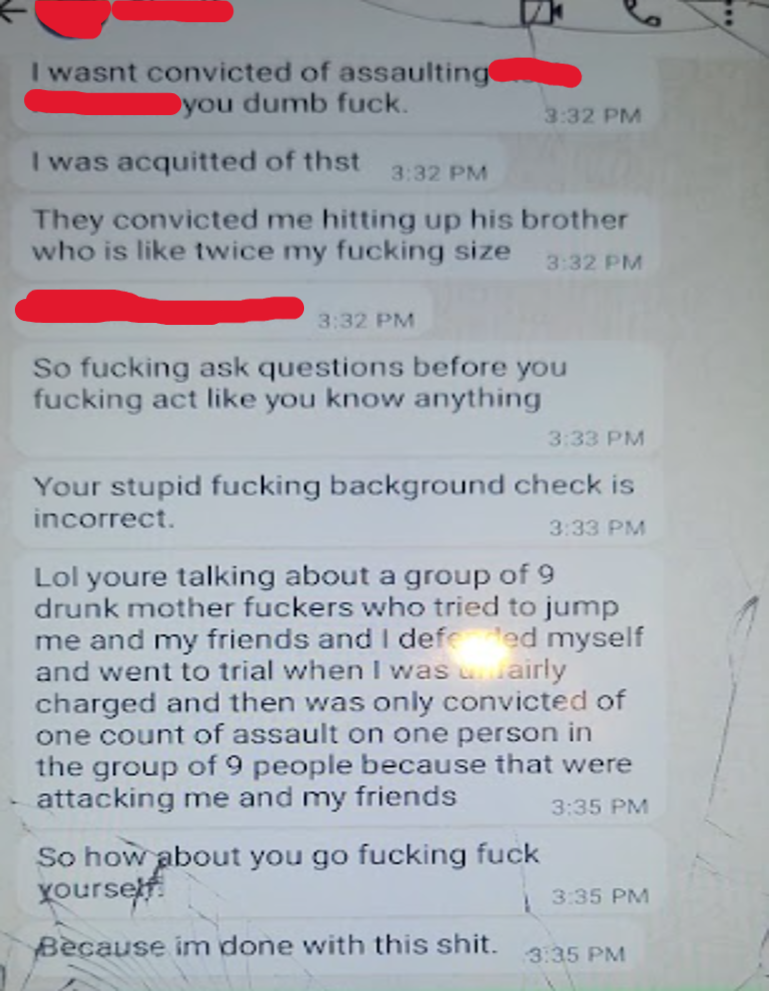
Figure 11 Messages in which he minimizes and disputes his criminal conviction when confronted with publicly available court records.
Documented Facts (Public Record):
Fact 1: Criminal Conviction
He was convicted of Assault in the Second Degree, a Class D felony, on one count, following a jury trial in New York County.
Fact 2: Summary of the Incident as Established at Trial
As established during trial proceedings, at approximately 5:00 a.m. on January 13, 2013, outside a pizzeria on MacDougal Street in Manhattan, he and several associates became involved in an altercation with a group of young men visiting New York.
According to court findings, he and his companions retrieved a tire iron, a baseball bat, and other objects from the trunk of his vehicle and used them to pursue and strike members of the group as they attempted to flee.
At least four individuals were assaulted. One victim then 24 years old, was beaten until he collapsed in the street and continued to be assaulted after losing consciousness. The attack resulted in a fractured skull and life-threatening injuries.
Following the assault, he and his associates fled the scene in his vehicle. They were later identified and apprehended several days after the incident.
2459 353/13
Fact 3: Judgment and Sentence
Judgment was rendered by the Supreme Court of the State of New York, New York County on January 8, 2014. Following a jury trial, he was convicted of assault in the second degree and initially sentenced to three years’ imprisonment.
On appeal, the sentence was modified in the interest of justice to two years’ imprisonment, followed by one and one-half years of post-release supervision. The conviction was otherwise affirmed.
2459 353/13
Denial of Parenthood
On January 2, 2026, through my own research using publicly available information, I became certain that he had a child that he had failed to disclose to me.
This discovery was deeply upsetting for several reasons. Early in the relationship, I was left with the understanding that he did not have children. Over time, this was reinforced through omission and patterns of behavior that caused me to question my own understanding of the situation. He also misrepresented aspects of his past relationship history in ways that, in hindsight, were misleading.
Throughout the thousands of messages we exchanged, he never acknowledged having a child or clarified the truth.
This discovery ultimately influenced my decision to speak publicly. My intention is not to sensationalize, but to share information that may help others make more informed decisions in their own lives.

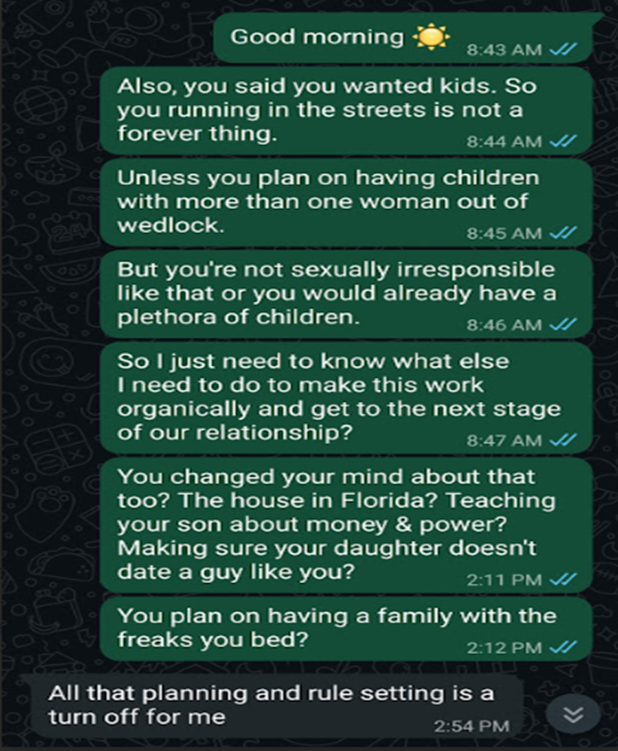
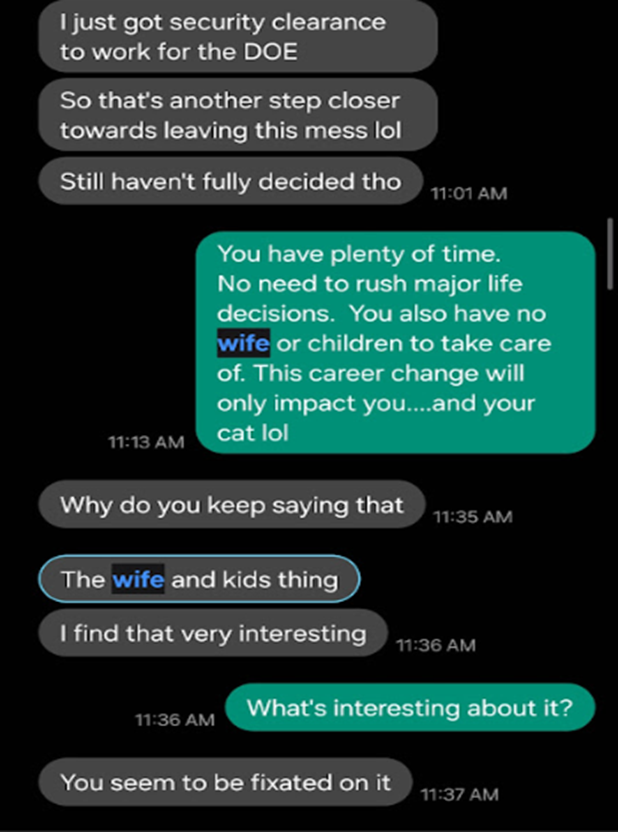
Figure 12 Messages in which he discusses future plans involving marriage and children.
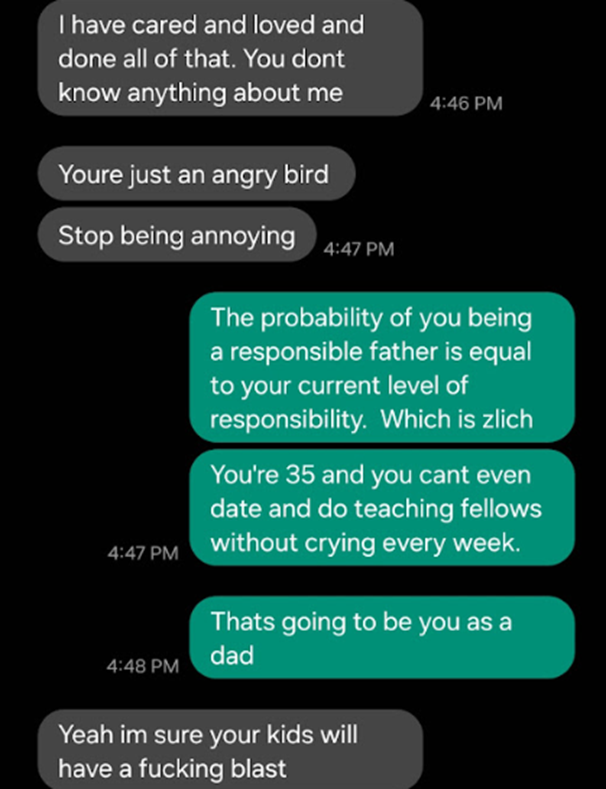
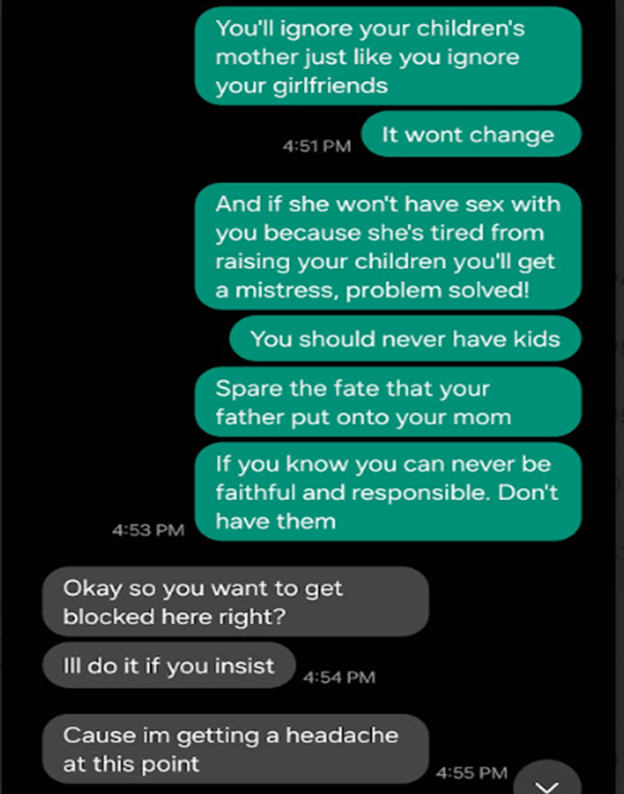
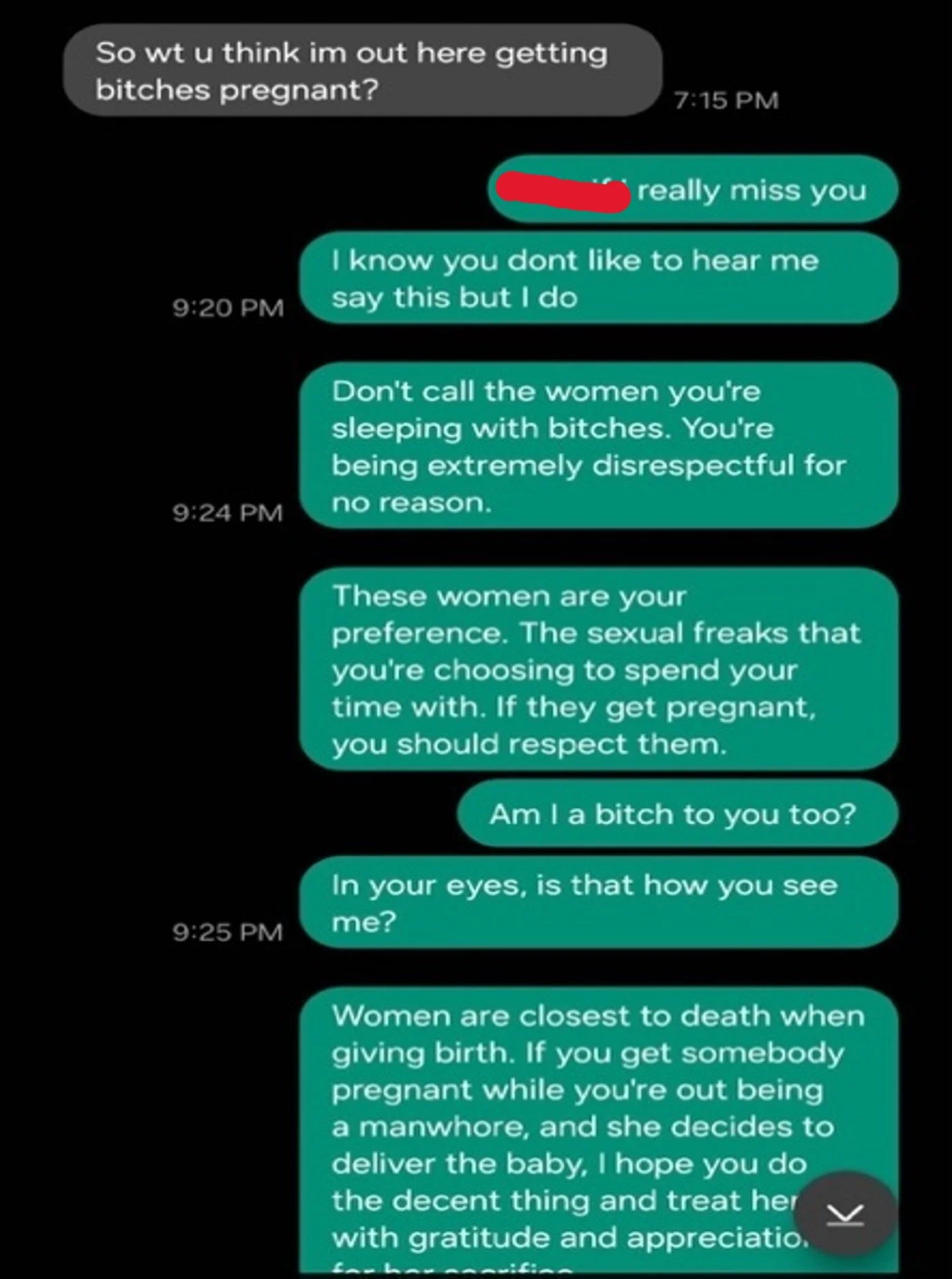
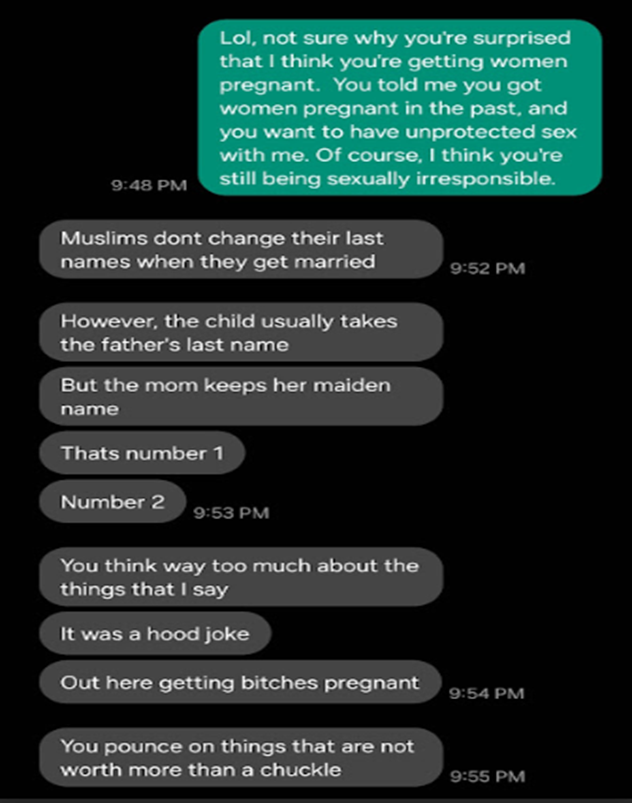
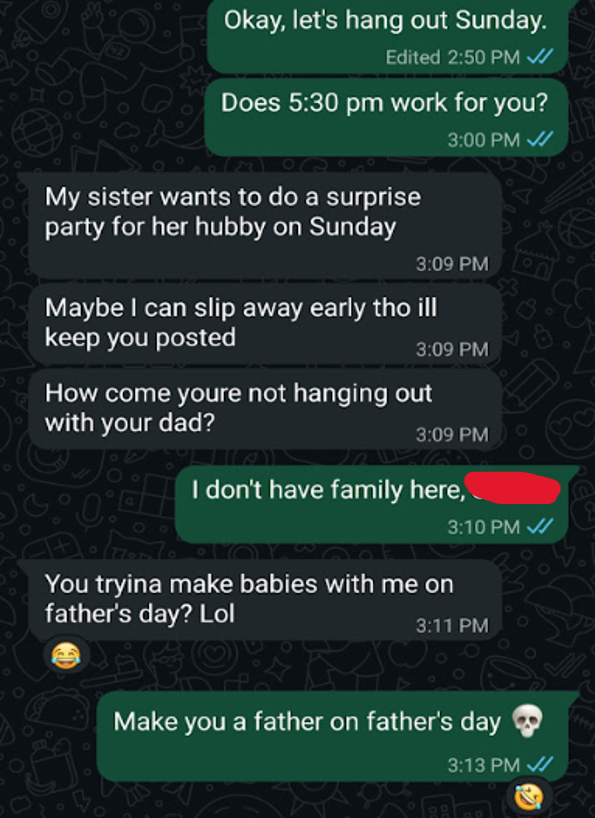
Figure 13 Messages exchanged during discussions about parenthood and plans to meet on Father’s Day, in which he does not disclose that he had a child and states he would be spending the day with his sister.
Notably, he and I made plans to see each other on Father’s Day. In the related messages, he did not mention spending the day with his child, instead stating that he would be visiting his sister.
Gaslighting as Reinforcement
In addition to direct lies, he repeatedly engaged in gaslighting to reinforce deception. Merriam-Webster defines gaslighting as “psychological manipulation of a person over an extended period of time that causes the victim to question the validity of their own thoughts, perception of reality, or memories.”
One notable example involved his living situation. He verbally told me his address on one of our dates, which I wrote down. Later, he attempted to convince me that I had recorded it incorrectly, despite having accurately noted what was said. This caused me to question my own memory and judgment.


Figure 14 Messages in which he disputes an address he previously provided, leading me to question the accuracy of my own memory.
Toward the end of the relationship, he indicated that he believed he had previously communicated to me that he had never been monogamous. When I presented our earlier conversations showing that this contradicted his original statements, he admitted that he had never been faithful in any relationship and stated that this was a lifelong pattern he would only change through repentance to God.

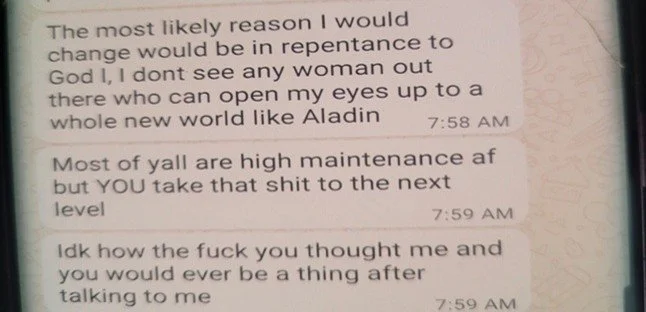


Figure 15 Messages showing contradictory statements regarding monogamy, culminating in his acknowledgment of a longstanding pattern of non-monogamy.
Suspected Falsehoods Without Conclusive Proof
The following are claims he made that I now doubt, based on established deception, but for which I do not have irrefutable evidence.
· His roommate: Given his sustained deception about having a child, I no longer believe his claim that he lived with a male Muslim roommate.
· His relationship status: Because he lied for months about fatherhood, I cannot verify whether he was truly single throughout our relationship.
· Teaching Fellows: He frequently cited work obligations as a reason for not seeing me. I have found no evidence that he was ever employed as a teacher or affiliated with Teaching Fellows.
· Additional children: I have no proof that he has other children, but given the circumstances, I suspect it is possible.
Figure 16 Messages reflecting his explanation of his living arrangement, which I later questioned based on established deception.
Excuse-Making as a Control Strategy
Bancroft notes that abusive men are “masters of excuse-making,” often externalizing responsibility and blaming circumstances rather than taking accountability (Bancroft, p. 71).
He routinely used excuses to avoid plans, accountability, or difficult conversations.
· He cited numerous illnesses and surgeries as reasons for canceling plans, often at the last minute, without providing verification.
· He also used his mother’s health as an excuse to avoid seeing me.
· On Valentine’s Day 2025, he claimed his phone had broken the night before and used this as justification for not spending the holiday together, stating he needed to have it repaired.
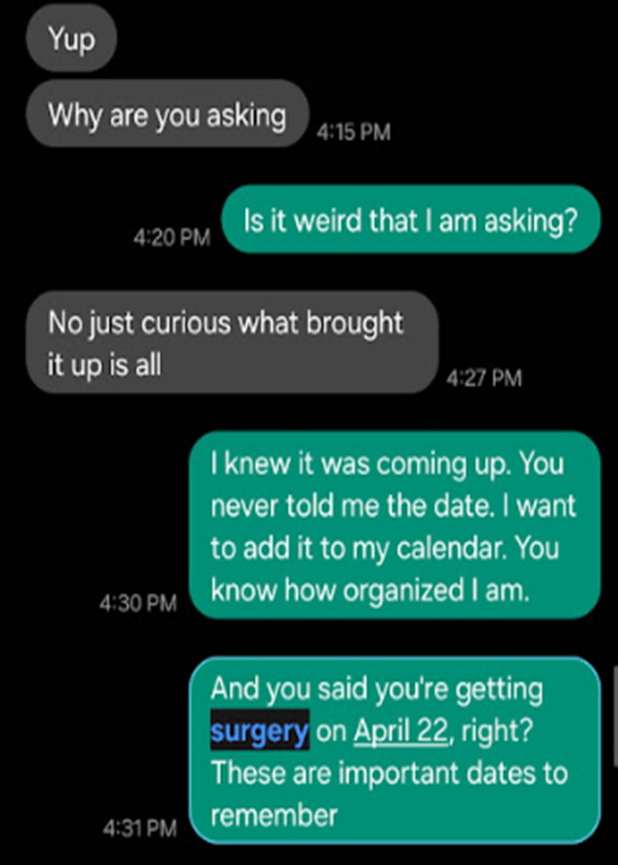

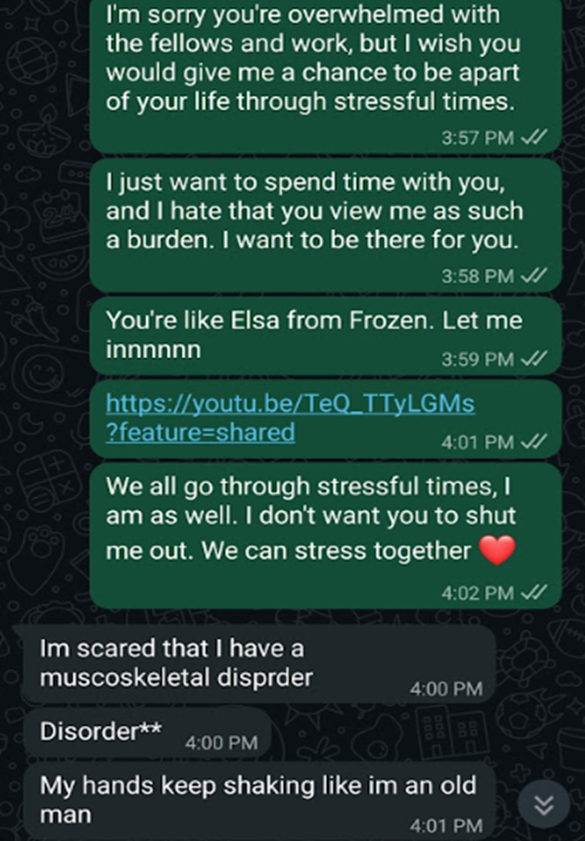


Figure 17 Messages illustrating repeated use of illness, work, and logistical issues as explanations for canceled plans and delayed communication.