
Why I’m Doing This
I am writing this story to share my personal experience with emotional abuse and to educate and inform victims about how to survive it before it escalates into physical abuse.
Psychology Today defines emotional abuse, also known as psychological abuse, mental abuse, or narcissistic abuse, as “a pattern of behavior in which the perpetrator insults, humiliates, and generally instills fear in an individual in order to control them. The individual’s reality may become distorted as they internalize the abuse as their own failings.”
Lundy Bancroft, author, workshop leader, and consultant on domestic abuse and child maltreatment, defines abusive men as “any man who has recurring problems with disrespecting, controlling, insulting, or devaluing his partner, whether or not his behavior also involves more explicit verbal abuse, physical aggression, or sexual mistreatment. Any of these behaviors can have a serious impact on a woman’s life and can lead her to feel confused, depressed, anxious, or afraid” (p. xiii).
This form of abuse is often dismissed or left unacknowledged in society, with no clear guidebook for coping or understanding the steps needed to seek justice. We label perpetrators as toxic, trash, players, or worse, but we need to call them what they are: abusers.
Unfortunately, there is very little that can be done in cases like mine. By sharing my story, I hope that victims of emotional abuse, of any gender, will feel validated and learn from my experience so they can take steps to get out.
For the women who are currently involved with my abuser, or who may be involved with him in the future, I want to provide factual evidence of his behavior toward me so they can make an informed decision about dating him. He is a convicted felon who was sentenced to three years in prison, has never been monogamous throughout his life, and is the father of at least one child. He lied to me about all three of these facts, and I suffered tremendously while trying to sort through his deception to uncover the truth.
It is not my intention to dissuade any woman from dating him. Rather, I am making this information publicly accessible so that if he lies about it, there is tangible proof.
I hope my story helps convince society that greater advocacy is needed for emotional abuse. As long as there are no real consequences, abusers will continue down their destructive path. Emotional abuse victims suffer silent wounds and lasting psychological damage. Our pain is just as legitimate and just as important as that of victims of sexual and physical abuse.
WHY I CONTINUED COMMUNICATING
Before sharing the events that follow, it is important to briefly explain why I continued communicating with him despite growing concerns.
At the time, my decisions were influenced by emotional attachment, confusion, and a belief that the relationship could improve. There were periods of inconsistency, moments of connection followed by distance, that made it difficult to fully step away. I also believed that, with enough effort and understanding, the relationship could stabilize.
Because of this, my actions were not always linear. There were times when I considered ending communication, followed by moments where I re-engaged. This was not due to a lack of concern, but rather the complexity of the situation and my hope that things could change. What follows reflects that context.
There is a common misconception that people only remain in difficult relationships due to financial dependence, children, or lack of options. That was not my situation. My reasons were psychological and emotional, and they developed over time.
Research on relationship dynamics helps explain this pattern. Several factors were particularly relevant in my experience:
1. Unequal Power
At times, the relationship felt unbalanced. I found myself adjusting my boundaries and values in an effort to maintain connection. I believed that if I was more accommodating, the relationship would become more stable. Instead, this dynamic made it easier for my needs to be overlooked. Over time, I became increasingly focused on maintaining the relationship rather than evaluating whether it was healthy for me.
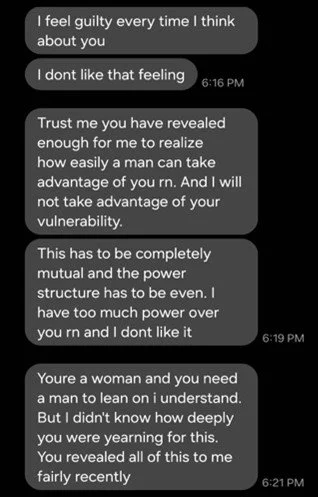
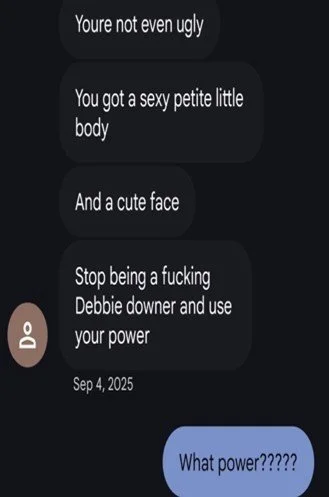
Figure 1 Power framed as concern, reinforcing imbalance and control.
2. Manipulation and Self-Doubt
There were moments where I began to question my own reactions and perceptions. I often felt that my concerns were being minimized or reframed in a way that made me doubt myself. Over time, this led to confusion and hesitation. Even as I write this, I recognize how much I questioned my own judgment during the relationship.
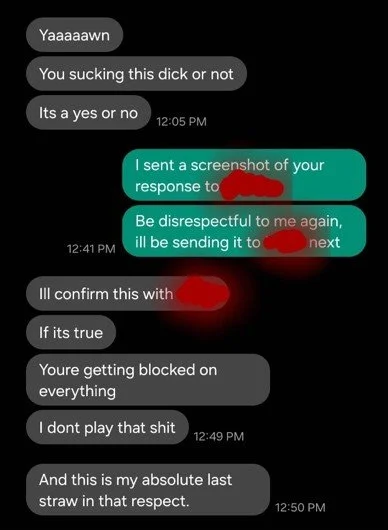
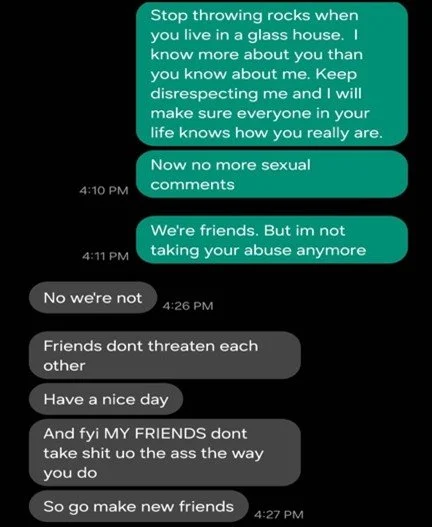
Figure 2 Escalation, intimidation, and reversal of blame used to regain control.
3. Hope
I believed that the relationship could return to how it felt in the beginning. As someone who values growth and believes people can change, it was difficult for me to accept that this situation might not improve. I held onto the idea that, with enough effort, things could become stable. Letting go of that belief felt like giving up on something that had potential.
Figure 3 Inconsistent messages that sustained hope while avoiding commitment.
4. Emotional Attachment
There were positive moments that strengthened my emotional connection. Over time, that connection made it harder to step away, even when there were clear concerns. I also began to rationalize certain behaviors and minimize others. This made it easier to stay, even when the overall dynamic was not meeting my needs.
Looking back, I understand that I normalized and rationalized behavior that I would not accept today. I minimized the negative and focused on the possibility of improvement. There was also a fear of starting over. I questioned whether I would find a healthier relationship, and at times, I chose familiarity over uncertainty. This does not excuse my decisions, but it explains them. My continued communication was not a contradiction of my concerns, it was a reflection of the complexity of the situation.
Figure 4 Moments of reassurance that deepened emotional attachment despite uncertainty.