
Chapter 9: Cheating & Triangulation
He admitted that he cheated on me the same night we agreed to be exclusive. This betrayal set the foundation for a pattern of deception, comparison, and psychological manipulation that continued throughout the relationship.
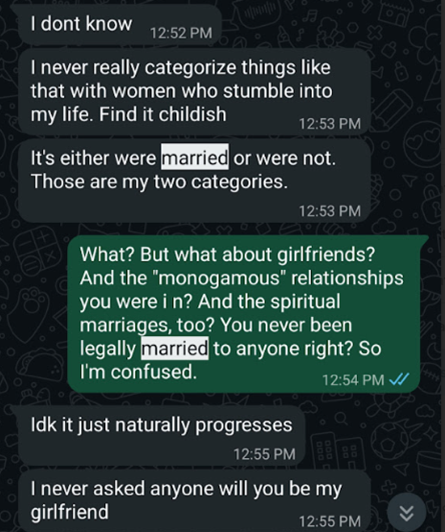


Figure 39 Text message exchange illustrating his admission of infidelity on the night exclusivity was established, alongside contradictory statements minimizing commitment, denying relational labels, and reframing cheating as incidental or opportunistic behavior.
Definition of Triangulation
According to Arlin Cuncic, in the article “What Is Triangulation in Psychology?”, triangulation is defined as “a manipulation tactic that involves bringing a third party into a conflict to create division or gain control.” I believe he repeatedly used triangulation by involving other women in ways that destabilized me emotionally, undermined my sense of security, and reinforced his control.
One early example occurred while I was out on a date with him. During the date, he received a call from another woman but did not answer. When I asked about it, I was given the impression that she was a “dear friend” who had supported him during a difficult period in his life. Months later, the way this relationship was described to me changed. Based on what was later conveyed, I understood this person to have been a significant past partner, at one point referred to in terms of a “spiritual marriage.” It was also suggested that there had been infidelity in that relationship, attributed to dissatisfaction within it. I found it concerning that he appeared to remain in contact with someone he described as a former partner, particularly while presenting himself to me as committed.
Pressuring Me Into an Open Relationship
Over time, he began pushing for an open relationship. I agreed, not out of genuine consent, but because I believed that if I refused, he would cheat regardless. By that point, I recognized that I was in an abusive relationship, and I felt that accepting his terms was the only way to maintain any connection at all. Something felt better than nothing. Eventually, I reached out to the woman he had described as his “spiritual ex-wife” to ensure she was aware that he was dating other women.
Sexual Comparison and Degradation Through Other Women
In addition to using other women to triangulate emotionally, he used them to sexually demean and berate me. He compared me to other women, stating that he needed a “b****” who already knew what he liked and could satisfy him sexually. Although he presented himself as someone who could guide or instruct a partner in building a strong physical connection, I was also given the impression that he felt I was not patient enough with his circumstances for that to develop.
At different points in the relationship, there were interactions involving other women, comparisons to others, and inconsistent attention that left me feeling uncertain and more focused on maintaining his approval.
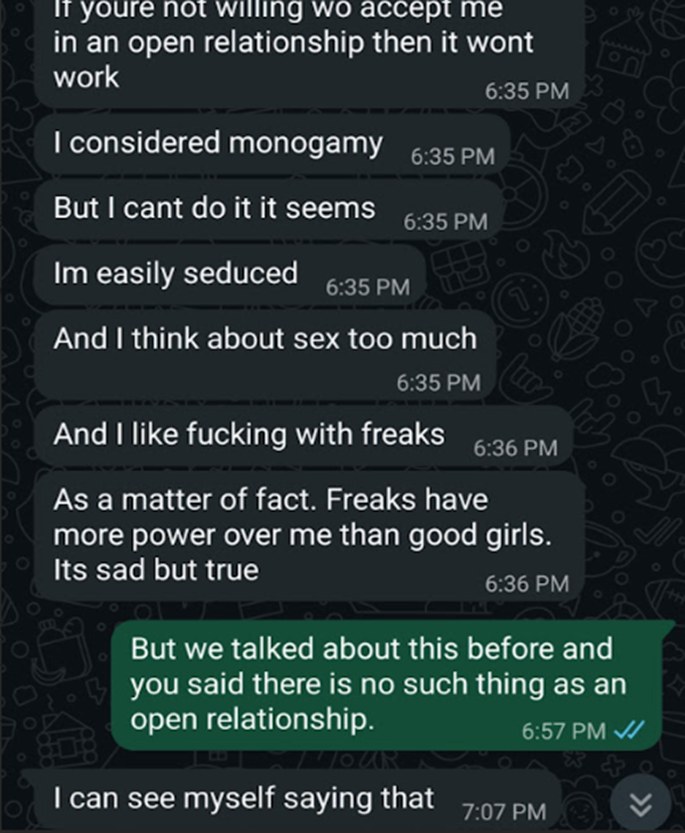
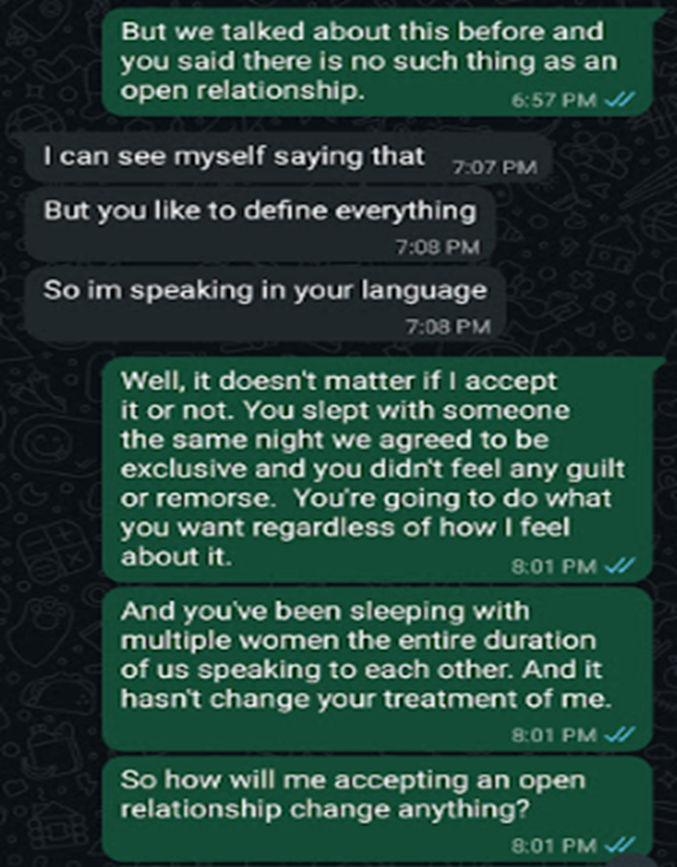
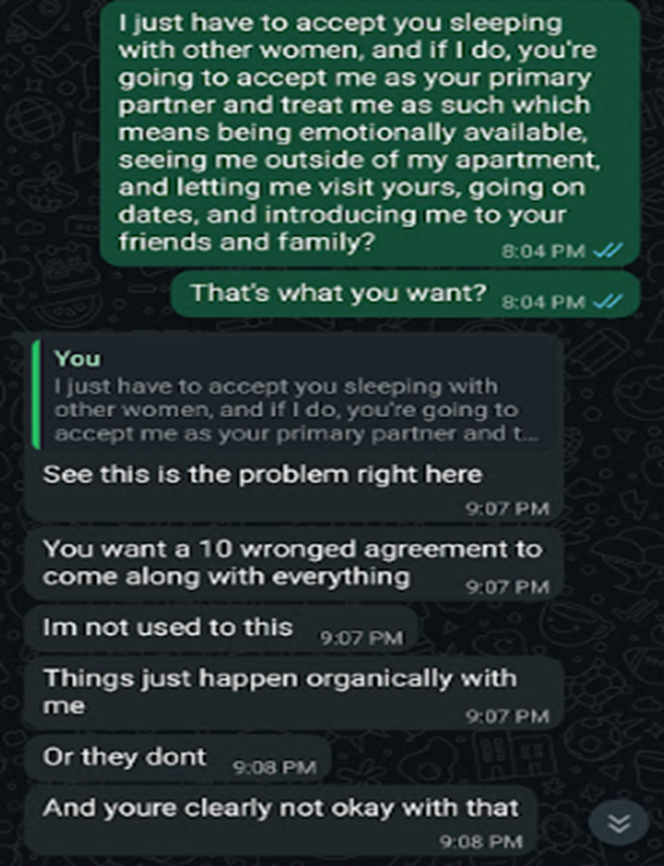
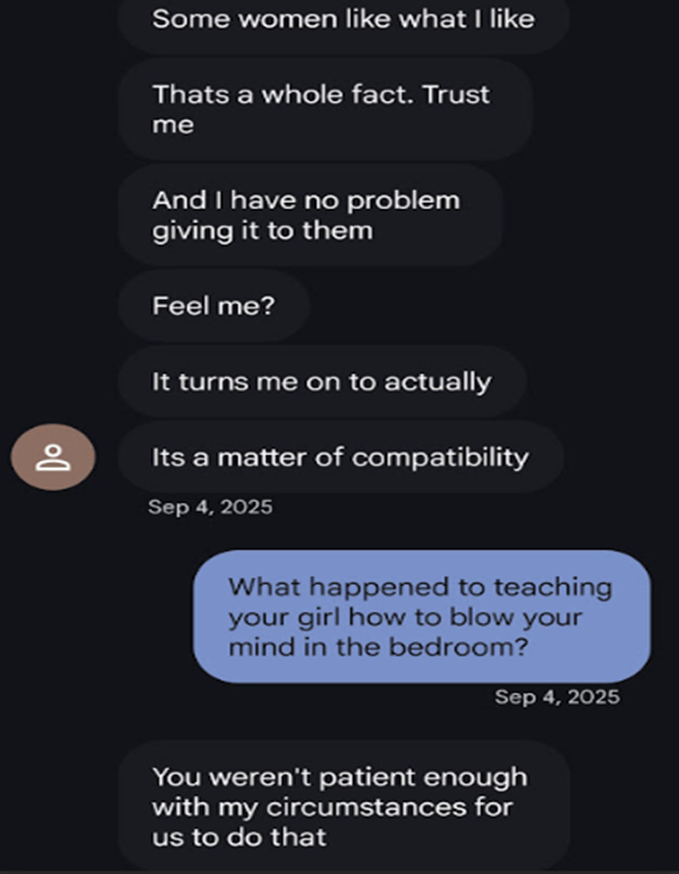
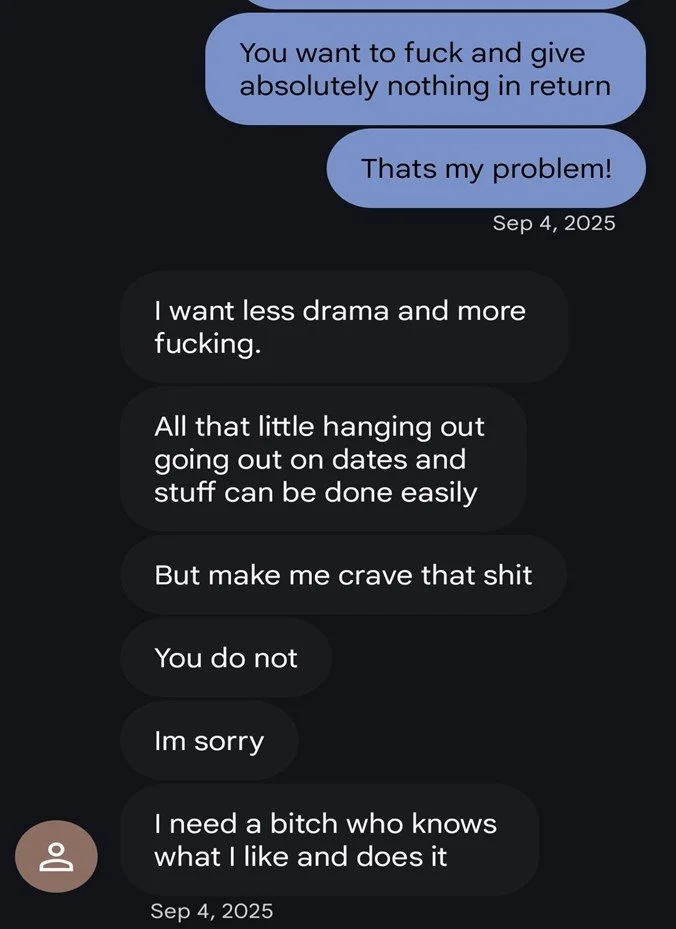
Figure 40 Text message exchanges demonstrating his normalization of infidelity, pressure to accept non-monogamy after exclusivity was established, and sexual comparison to other women, illustrating triangulation through devaluation and coercive reframing of relationship expectations.

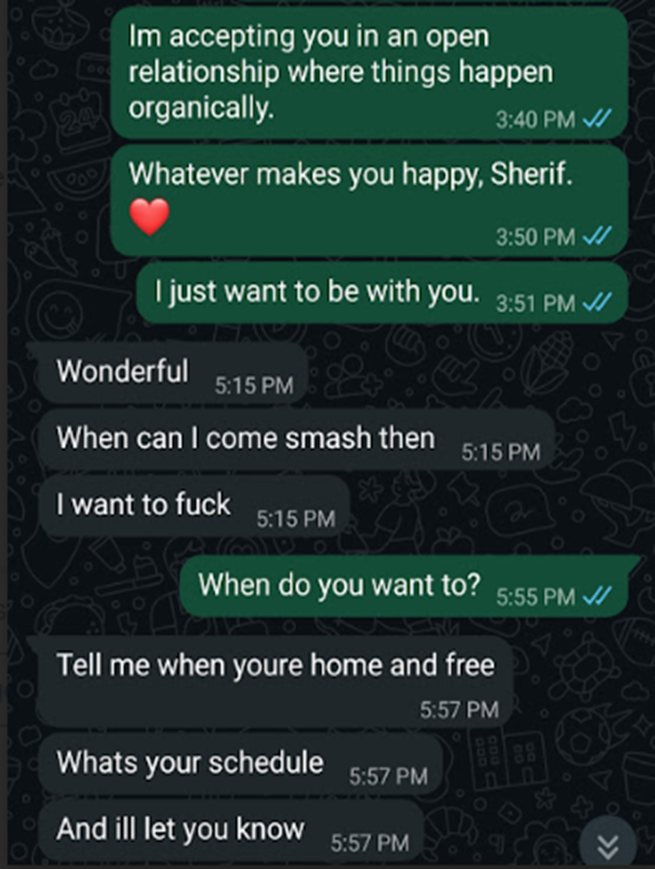



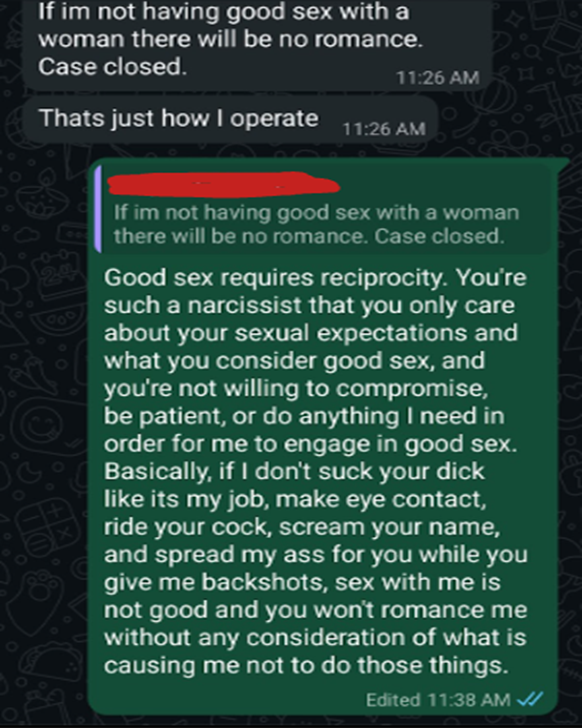
Figure 41 Text message exchanges illustrating sexual coercion and triangulation through comparison, demeaning sexual standards, and conditional affection, where emotional connection and relationship legitimacy were framed as contingent upon meeting porn-based sexual expectations and competing with other women.