
Chapter 8: Minimizing, Denying, and Blaming
Throughout the relationship, he consistently minimized, denied, or reframed his behavior in ways that invalidated my experiences and shifted responsibility away from him. Rather than engaging with my concerns in good faith, he dismissed them outright, denied events that had occurred, or redirected conversations to avoid accountability.
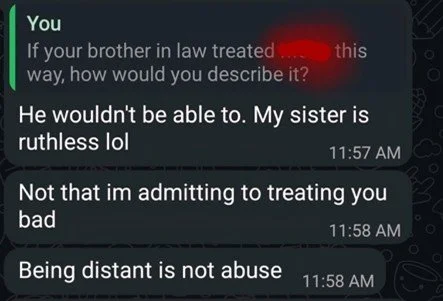

Figure 36 Examples of minimization and intimidation used to deny harm and silence discussion. When concerns about mistreatment were raised, he dismissed the behavior as “not abuse,” denied responsibility, and issued threats of permanent cutoff for questioning
Minimizing the Abuse
When I raised concerns about the emotional harm caused by his behavior, he repeatedly downplayed its significance. He asserted that emotional distance was “not abuse,” and that his refusal to show up consistently, provide reassurance, or offer emotional support did not constitute mistreatment. He framed my expectations as unreasonable, implying that abuse only exists in overt or extreme forms.
In one instance, he stated that he was “not my knight in shining armor.” Following that, the conversation focused on whether my expectations were unrealistic rather than on the specific concerns I had raised.
After interactions like this, I became less likely to raise concerns or revisit those topics.
Denial of Events
He also denied specific incidents when confronted, even when they had occurred clearly and were emotionally significant. After the June 14 incident in which sexual consent was obtained under threat of abandonment, he later stated, “I didn’t say that,” rejecting my account entirely.
This denial was not accompanied by curiosity, reflection, or a willingness to discuss the event. Instead, it functioned as an absolute negation of my reality. By denying that his words or actions had taken place, he undermined my confidence in my own memory and perception, reinforcing earlier patterns of gaslighting.
Such denial prevented resolution or repair and reinforced a dynamic in which only his version of events was treated as legitimate.

Figure 37 Screenshot demonstrating denial of coercive behavior after it was clearly named. The response functions to erase the incident rather than engage with its impact.
Blame-Shifting and Confusion Tactics
When I attempted to discuss harm, boundaries, or accountability, he frequently changed the subject or reframed the conversation in ways that avoided addressing the issue at hand. Rather than responding directly, he would introduce unrelated points, re-litigate my tone or emotional response, or redirect the discussion entirely.
According to Lundy Bancroft, this tactic functions as a form of confusion designed to derail accountability and exhaust the other person (Bancroft, p. 67). In practice, these conversational shifts left me feeling disoriented, unheard, and increasingly uncertain about whether my concerns were valid or worth raising.
Over time, this pattern conditioned me to abandon difficult conversations altogether, as attempts to seek clarity or repair were met not with engagement, but with dismissal, denial, or deflection.
Figure 38 Minimization of emotional harm via disengagement. The refusal to acknowledge stated pain reinforces invalidation and destabilization.