
Chapter 6: Spiritual & Cultural Weaponization
Although spiritual and cultural abuse is not explicitly listed on the Power and Control Wheel, it played a significant role in this relationship and functioned as a tool of manipulation, exclusion, and control.
The first time I returned to him after leaving, it was because he framed his behavior through Islam. Many Muslims raised in strict religious households struggle to reconcile romantic relationships with cultural and religious expectations. This tension is widely recognized and portrayed in mainstream media, such as The Big Sick. Initially, I believed his secrecy reflected internal conflict or fear of family judgment. Over time, however, it became clear that religion was not guiding his values or behavior consistently. He did not practice secrecy out of devotion, love, or restraint. Instead, Islam was invoked selectively, used when convenient, discarded when not, and weaponized to avoid accountability.
He repeatedly used religious justification to exclude me from his life, deny me legitimacy, and excuse mistreatment. When I challenged inconsistencies between his stated beliefs and his actions, he dismissed accountability entirely, stating that no one could judge him but God, that he would not change for anyone but God, and that he only feared God.
Religion Used as a Barrier and Excuse
He routinely cited Islam to justify emotional distance, absence, and secrecy, including:
· Using Ramadan, Eid, and other religious holidays as reasons not to see or communicate with me, while continuing to socialize with others.
· Refusing to include me in his family or social life under the justification that I was “not his wife.”
· Declining to see me on his birthday while making time for family and friends, explaining that they were not “a woman he wasn’t married to.”
These exclusions were not applied universally. They were selectively enforced in ways that limited my access, voice, and legitimacy in his life.
Figure 26 Text messages illustrating the use of religious observance as justification for emotional withdrawal and postponement of the relationship, framing continued connection as conditional upon the conclusion of Ramadan.
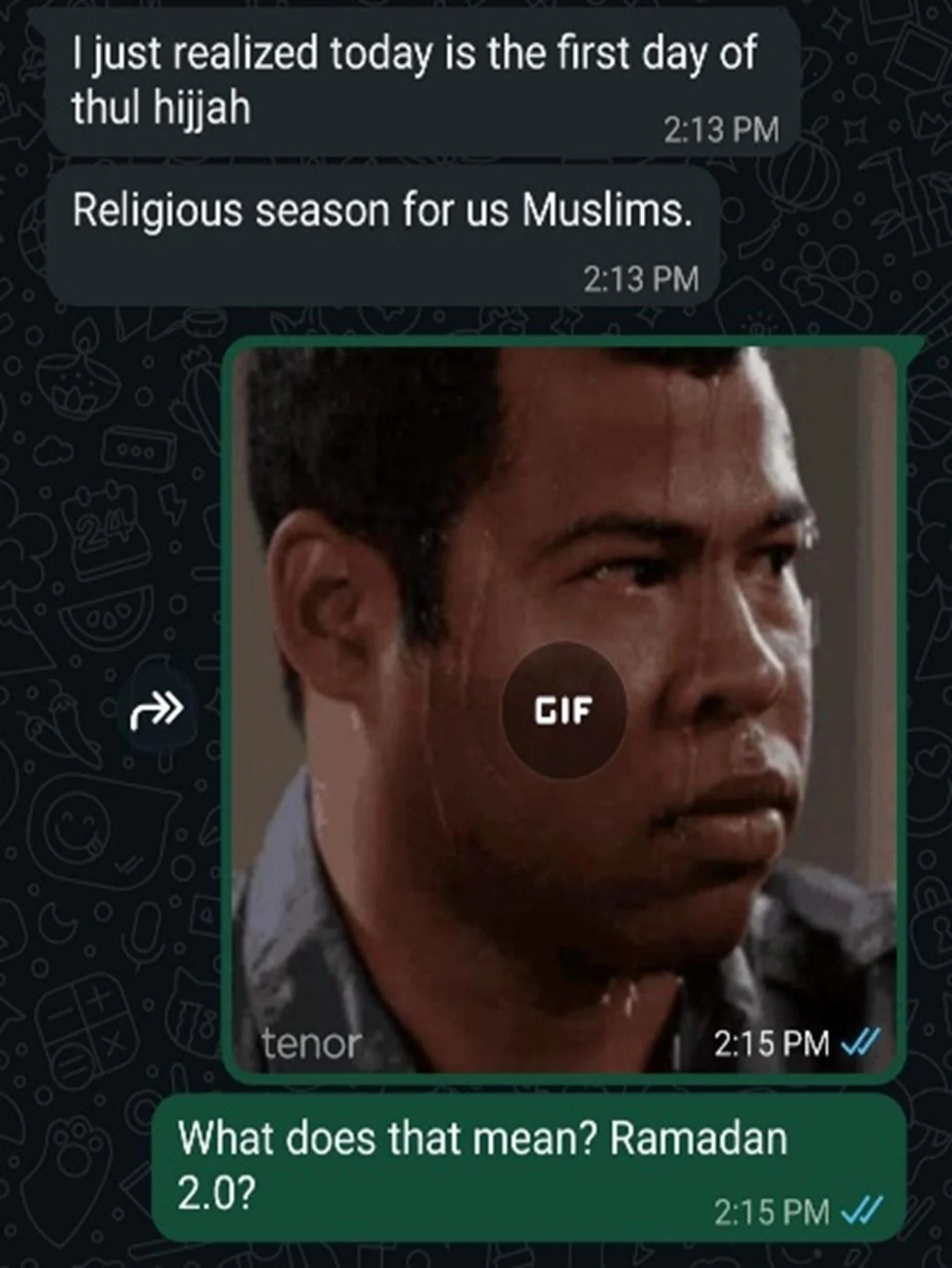
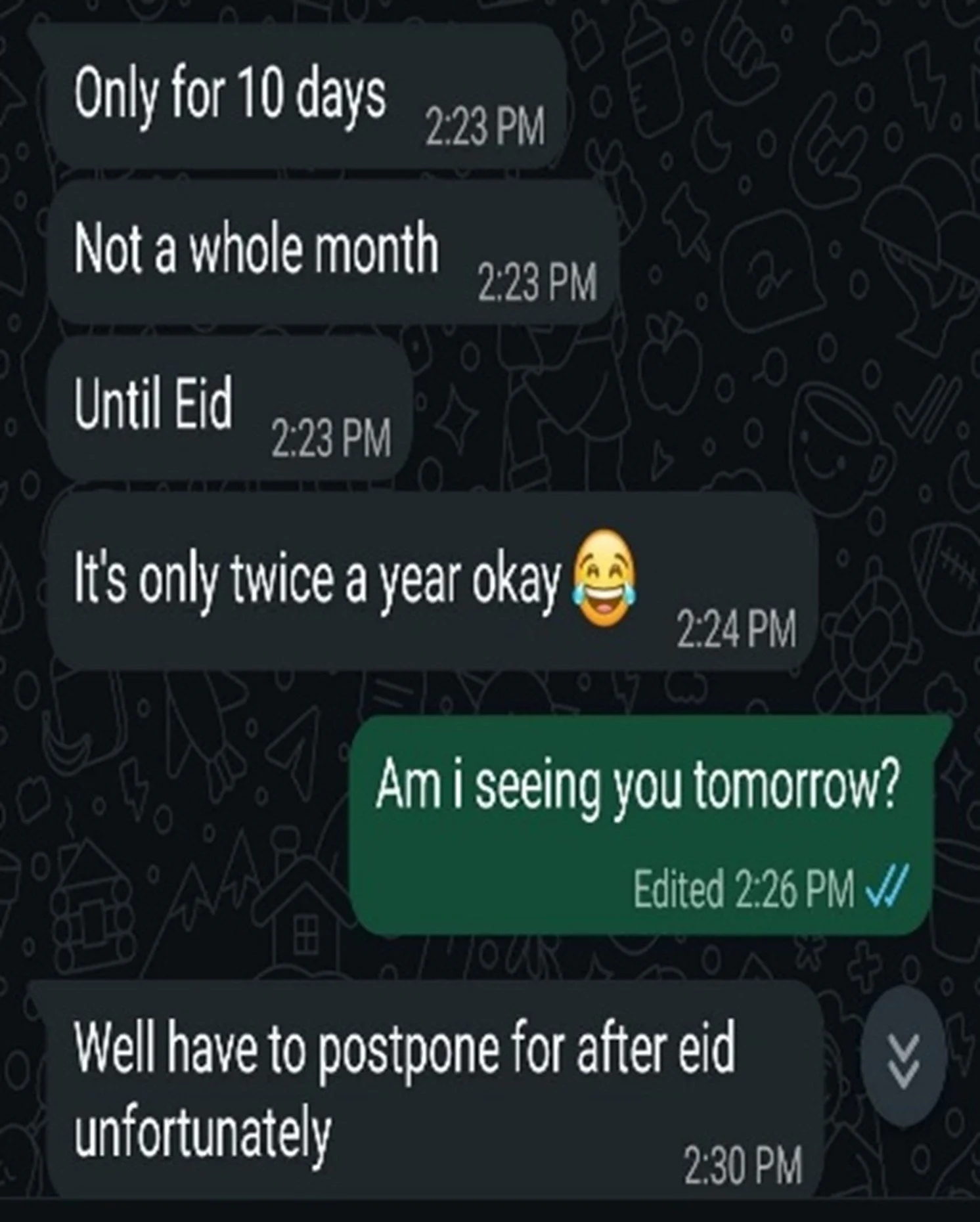
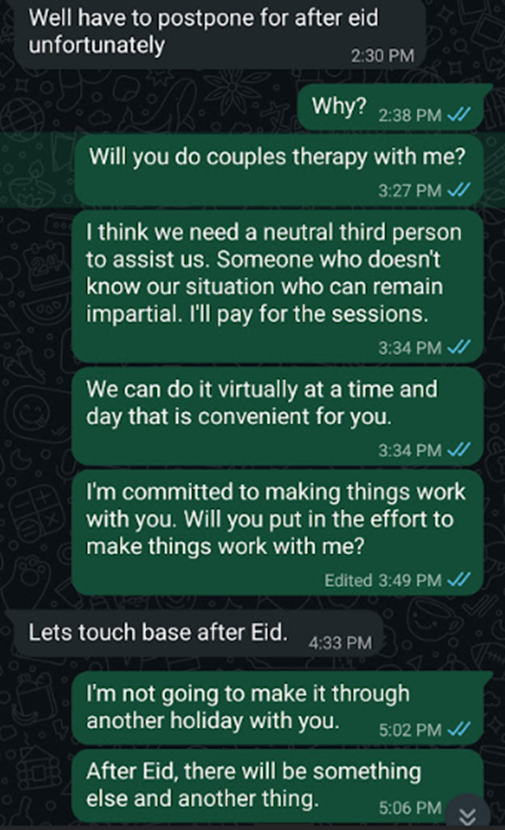
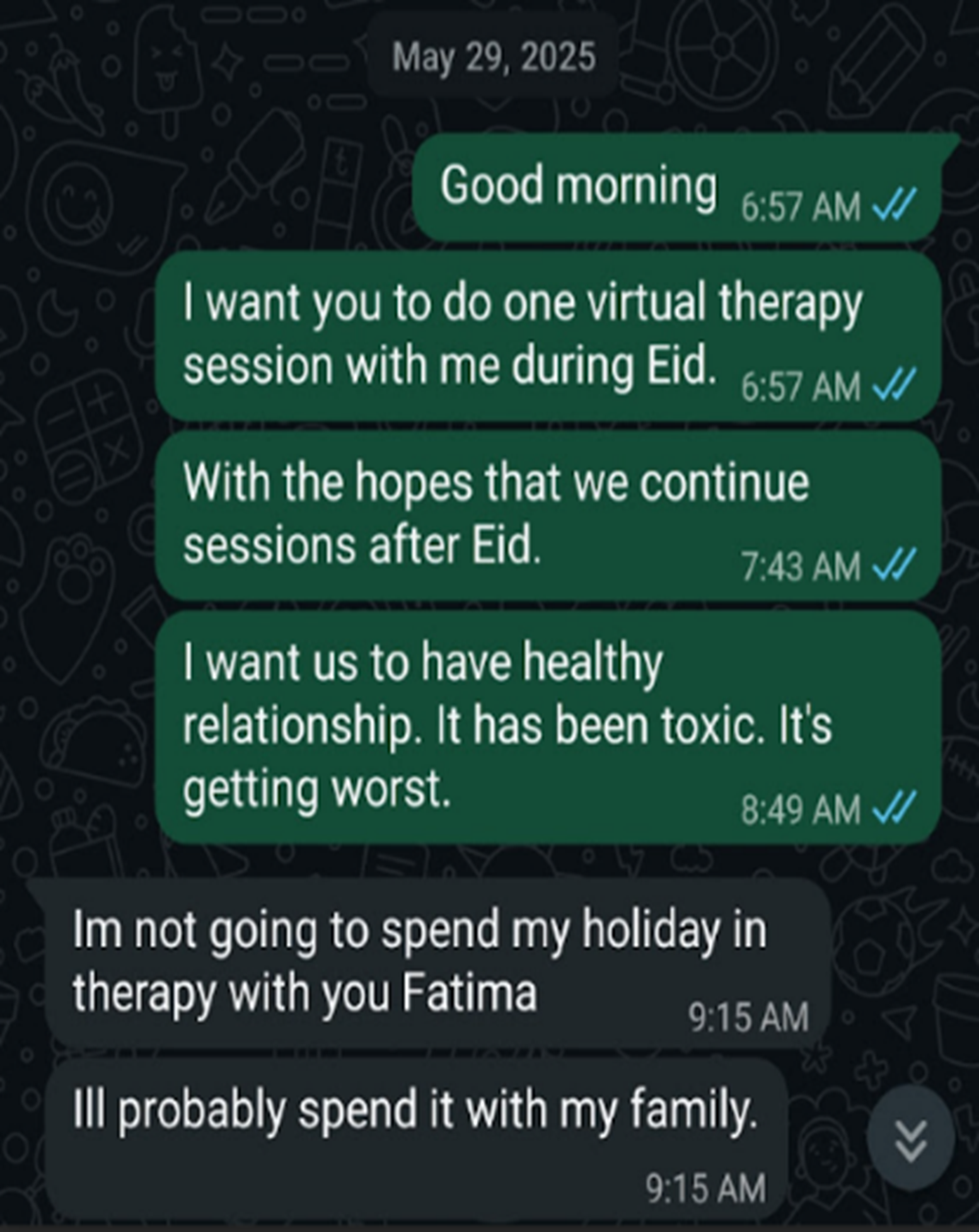
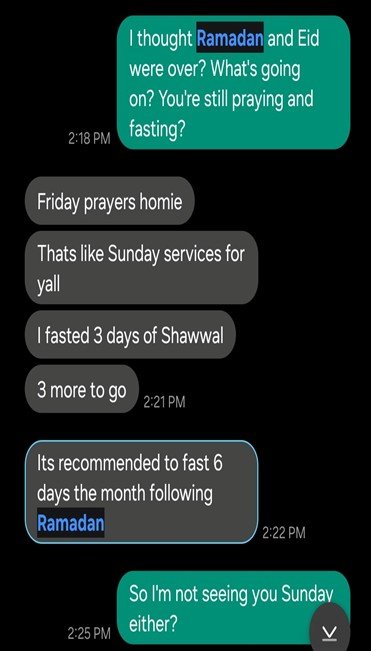
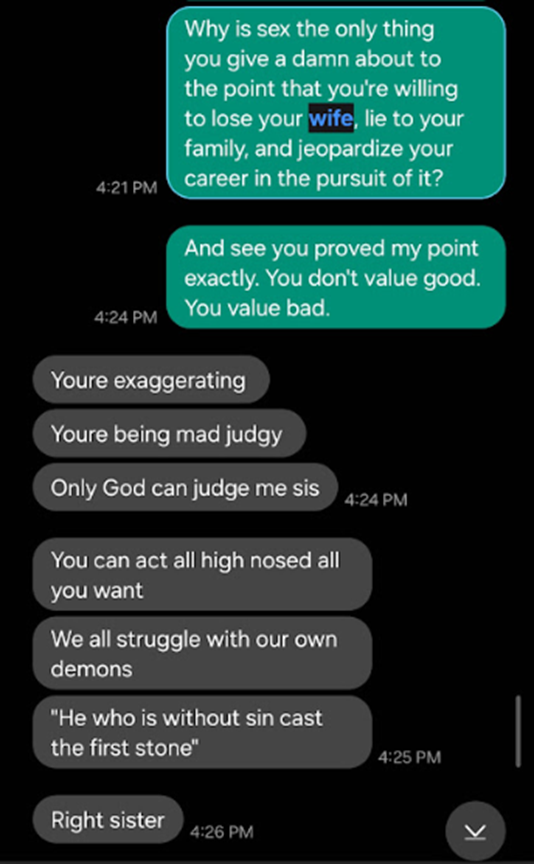
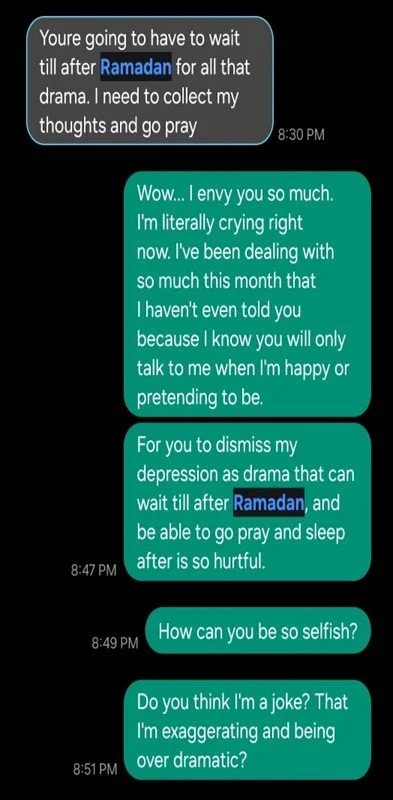
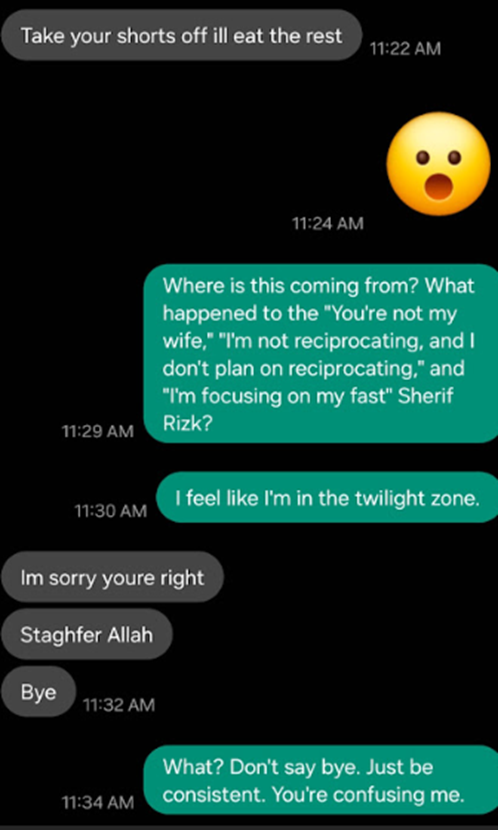
Figure 27 Series of text exchanges showing the repeated invocation of religious observance (Ramadan, Eid, and related practices) to postpone communication, avoid accountability, and suspend the relationship indefinitely, while emotional needs and requests for repair were framed as inappropriate or excessive.
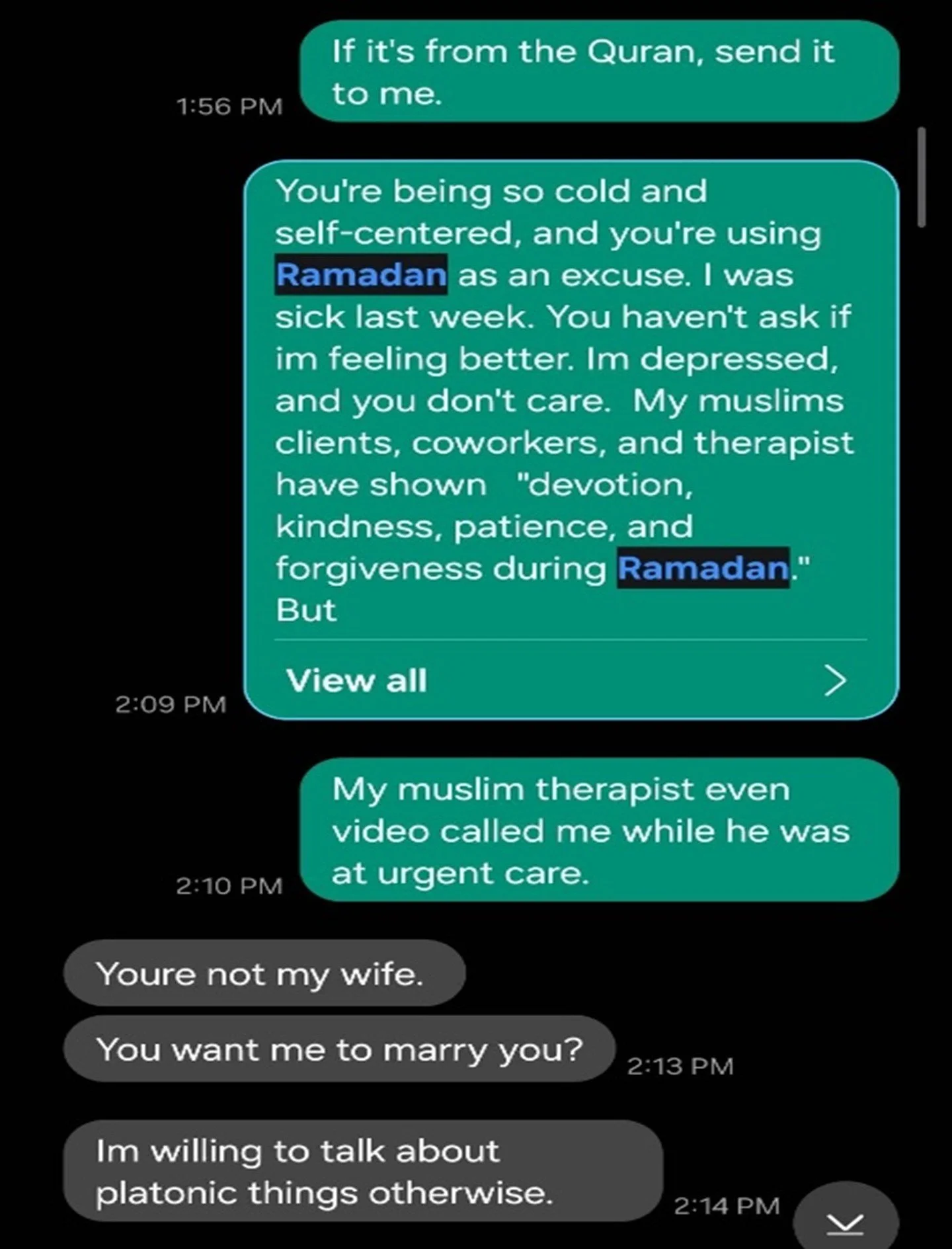
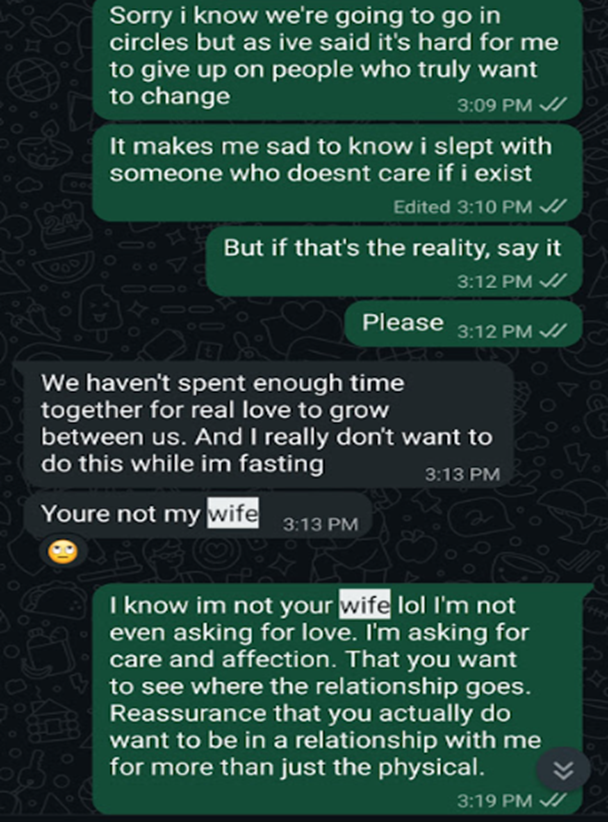
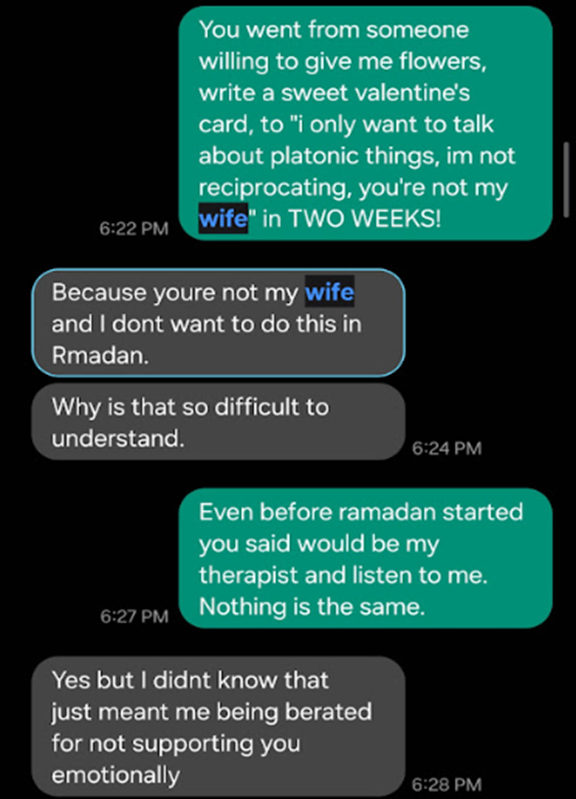
Figure 28 Text exchanges illustrating the use of religious language and marital status (“not my wife”) to justify emotional withdrawal, deny care, and redefine relational expectations during Ramadan.
Moral Hierarchies and Dehumanization
He repeatedly framed women as belonging to one of two categories: wife and not wife. Women outside of marriage were characterized as morally illegitimate, while simultaneously being pursued sexually.
Despite invoking religious morality to justify withholding legitimacy, he did not take steps to formalize the relationship in a way that would make it “halal.” The moral burden was placed entirely on me, while he retained freedom, access, and control.
Figure 29 Text messages illustrating the repeated use of marital status (“not my wife”) and religious framing to deflect emotional responsibility and minimize requests for care and commitment.
Figure 30 Text exchange illustrating the categorization of women based on marital status and the differential moral framing applied to “married” versus “not married” women.
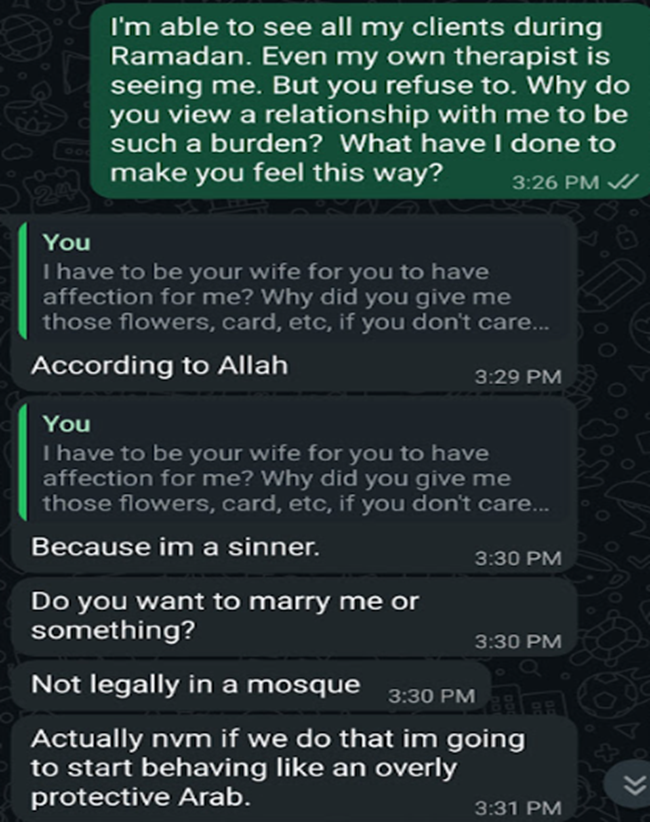
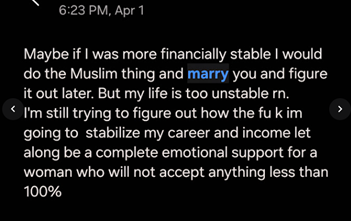
Figure 31 Text exchanges showing religion and financial instability cited as reasons to withhold commitment, affection, and emotional support while maintaining relational ambiguity.
Figure 32 Text exchange illustrating exclusion from social life and the use of marital status to justify differential treatment.
Conditional Futures and Spiritual Deflection
He also engaged in future faking, a tactic in which a promised future is used to maintain attachment without present accountability. He spoke about marriage, children, and long-term partnership, but only conditionally and indefinitely.
Examples included:
· Entertaining the idea of having children with me, provided they were raised Muslim, without offering commitment or stability.
· Claiming he needed to “stabilize” his life before marriage, while simultaneously outlining restrictions and expectations I would be required to meet if we were to marry.
· Presenting spiritual growth or repentance as something he might pursue someday, while using religion in the present to excuse harmful behavior.
Religion, culture, and spirituality were not guiding principles in this relationship. They were tools, used to justify exclusion, deflect accountability, maintain control, and silence my objections.
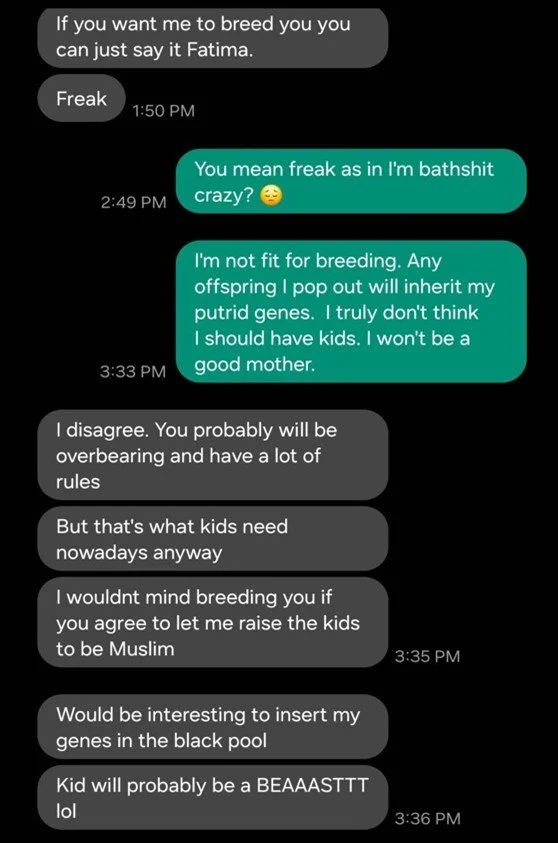
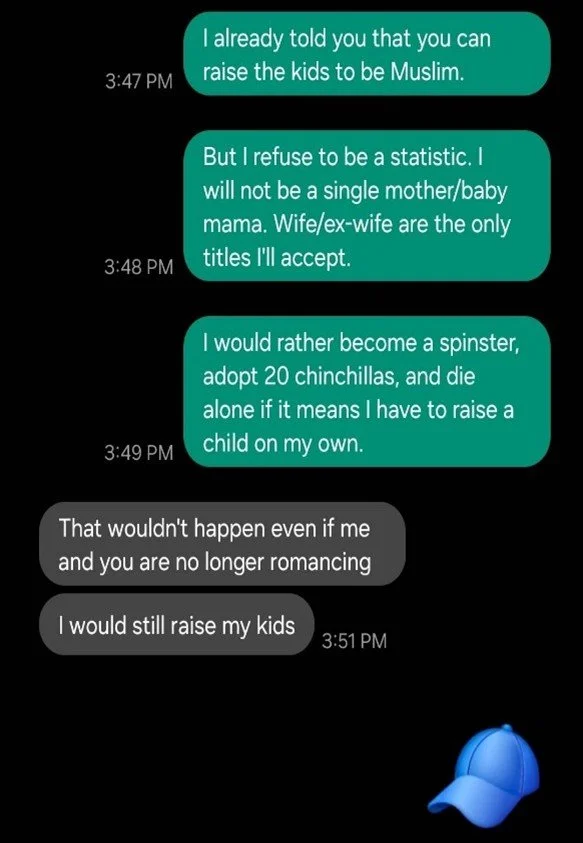
Figure 33 Text exchange discussing reproduction and child-rearing framed through control, conditional acceptance, and religious justification.
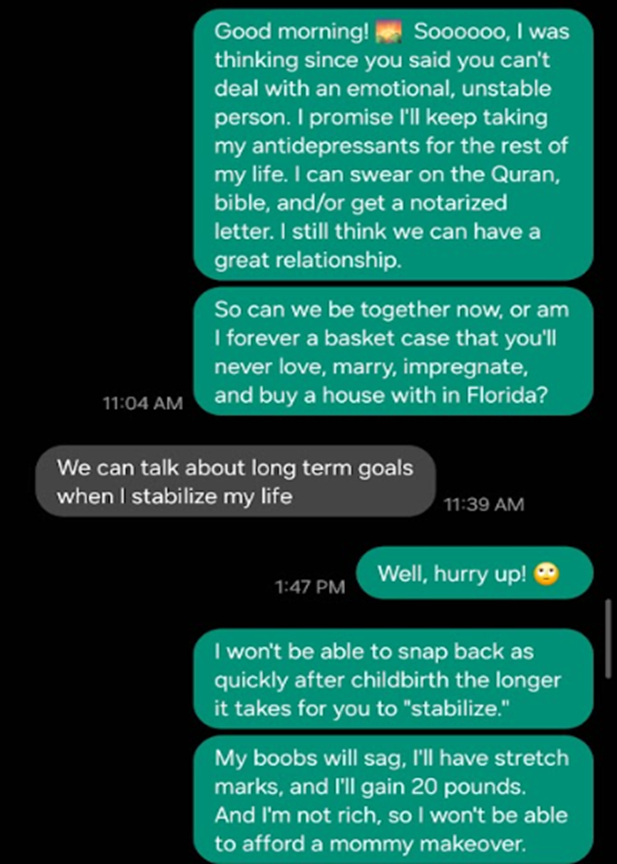
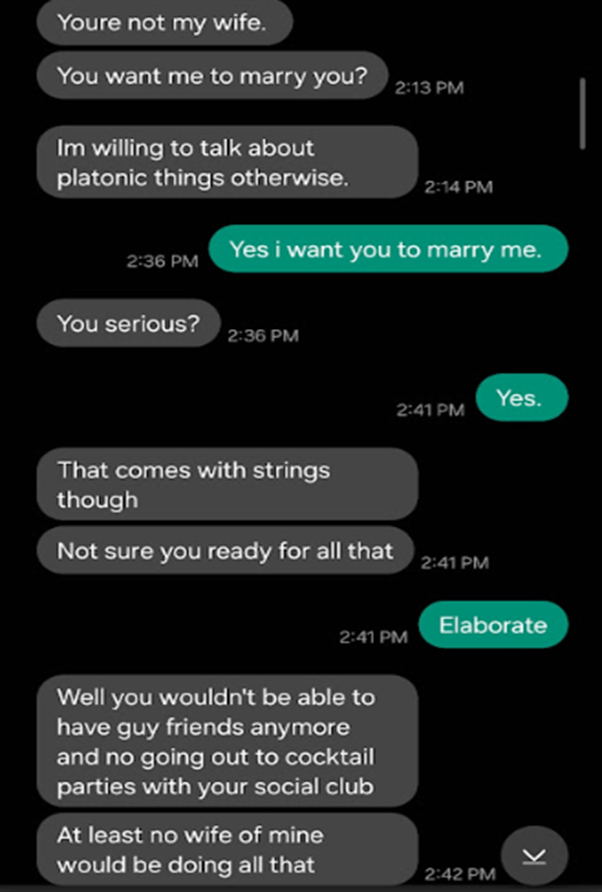
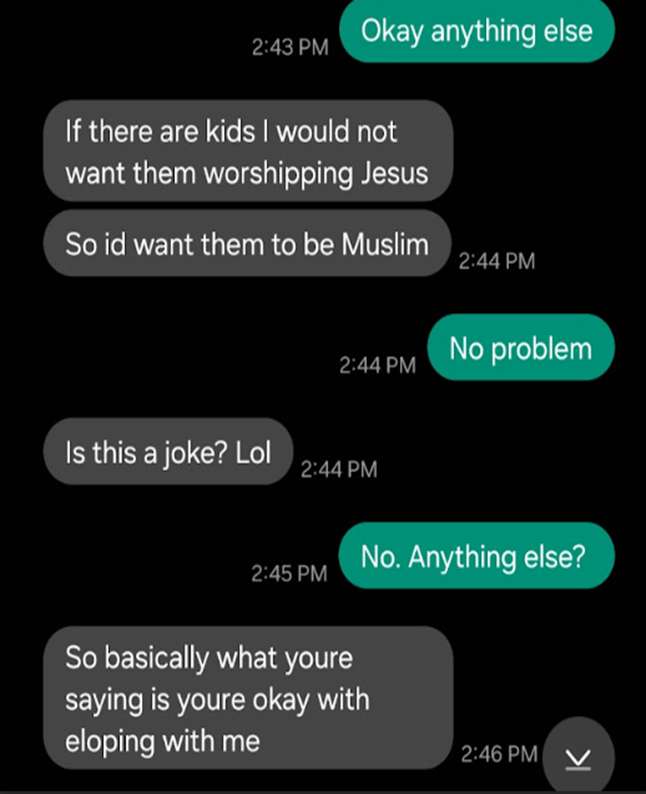
Figure 34 Text exchange illustrating conditional commitment, future promises tied to marriage, and the imposition of restrictive expectations framed as prerequisites for legitimacy.